
Investing in a Turnkey Rock Wool Production Line is one of the most consequential capital decisions an insulation manufacturer will make. A production line that runs uninterrupted for a decade can generate millions in profit. One that suffers chronic downtime, integration gaps, or quality inconsistency can erode margins from day one. The fundamental fork in the road is whether to purchase a turnkey solution — a fully integrated line delivered, installed, and commissioned by a single supplier — or to source melting furnaces, centrifuges, curing ovens, cutting sections, and packaging machines from multiple vendors and assemble them piece by piece. Both approaches have succeeded in real factories and both have failed spectacularly. The difference almost always comes down to how well the buyer’s project management capacity, technical depth, and risk tolerance match the procurement model they choose.
A Turnkey Rock Wool Production Line is the right choice when the buyer lacks in-house engineering resources to integrate multi-vendor equipment, needs a guaranteed production start date, and prioritizes single-source accountability for performance and warranty. Purchasing individual equipment makes sense when the buyer has experienced process engineers on staff, wants to optimize each machine to proprietary specifications, and is willing to absorb integration risk in exchange for potentially lower upfront costs and greater long-term customization freedom.
This article examines every dimension of the turnkey-versus-individual decision — cost structure, timeline, compatibility risk, after-sales support, and customization flexibility — so buyers can evaluate their own position honestly and choose the procurement model that matches their operational reality.
What Is a Turnkey Rock Wool Production Line?
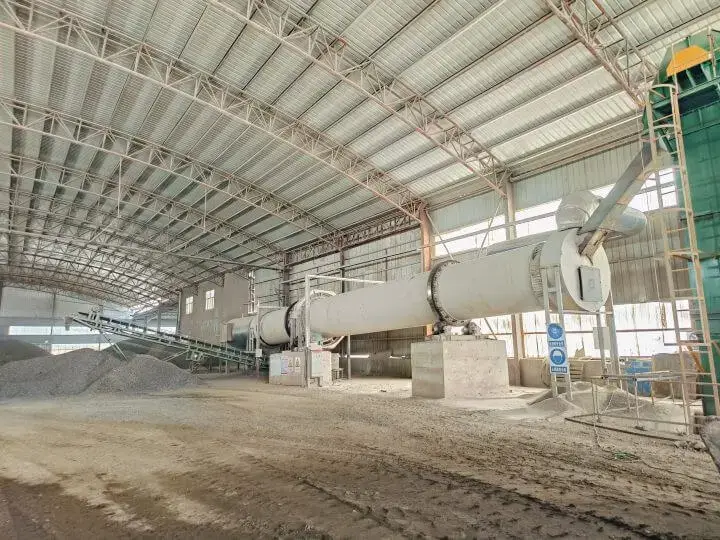
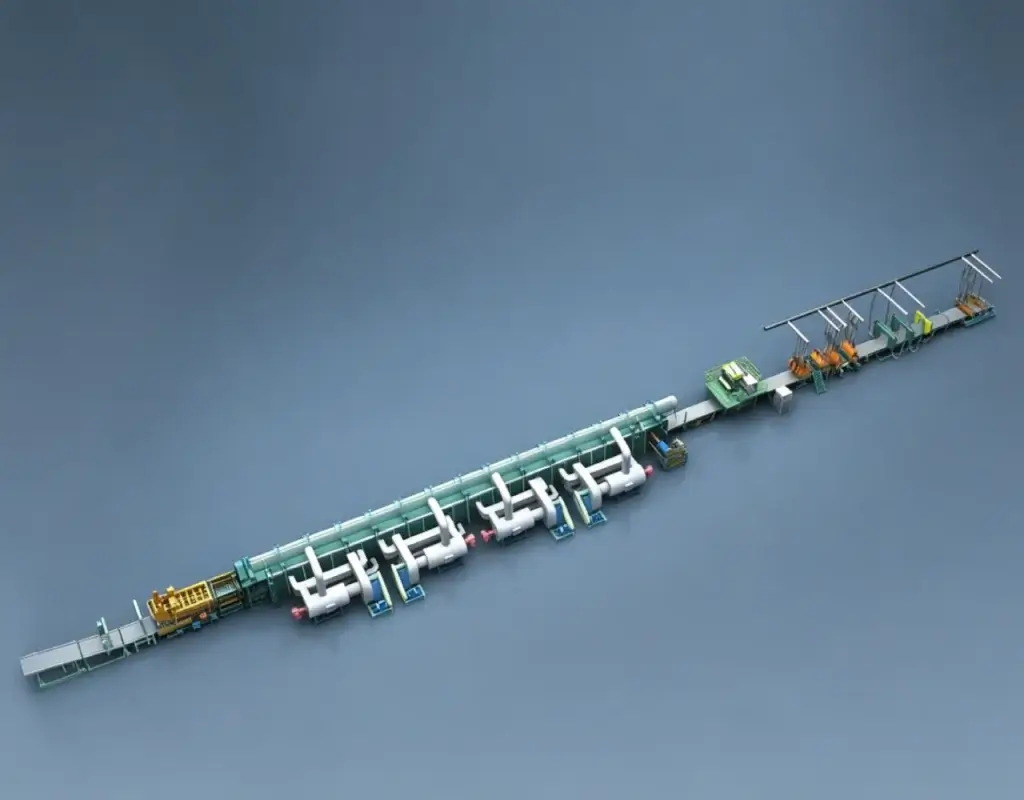
A Turnkey Rock Wool Production Line is a complete insulation manufacturing system where one supplier designs, manufactures, delivers, installs, and commissions every major piece of equipment — from the batching system and melting furnace through the centrifuge, curing oven, cutting section, and packaging machine — and hands over a production-ready facility to the buyer.
The turnkey model originated in industries where process integration is so tight that separating equipment procurement from system integration creates unacceptable risk. Petrochemical refineries, cement plants, and glass manufacturing have used turnkey contracting for decades. Rock wool manufacturing fits this pattern because the output of the melting furnace directly determines the feed conditions for the centrifuge, which determines the fiber quality entering the curing oven, which determines the board density reaching the cutting section. A failure at any stage cascades downstream instantly.
A genuine turnkey mineral wool line includes far more than hardware. The supplier typically provides factory layout design, civil engineering specifications, utility connection diagrams, process control software, operator training, and a performance guarantee tied to agreed output volumes and product quality metrics. The buyer’s primary responsibility is to prepare the site — foundations, power supply, water, compressed air, natural gas — and have trained operators ready when the supplier completes commissioning.
This model appeals to first-time insulation manufacturers entering the market, companies expanding into a new geographic region where they lack a local engineering team, and investors who want a predictable capital expenditure with a fixed timeline and guaranteed output. It shifts the integration burden and the bulk of technical risk from the buyer to the supplier.
What Does Buying Individual Equipment Look Like?
Buying individual equipment means the buyer acts as its own system integrator, sourcing a cupola furnace from one supplier, a centrifuge from a second, a curing oven from a third, and cutting and packaging machines from additional vendors, then managing all interfaces, control system integration, and commissioning internally or through contracted engineering firms.
This approach gives the buyer maximum control over every machine specification. If the factory’s competitive advantage is producing ultra-high-density rock wool boards for industrial pipe insulation, the buyer can select a centrifuge optimized for dense fiber output, a curing oven with extended residence time capabilities, and cutting equipment rated for heavy board thicknesses — none of which might be standard in a turnkey package from a supplier whose default configuration targets mid-density residential products.
The rock wool manufacturing equipment supply chain is fragmented enough to make piecemeal procurement feasible. Cupola furnace manufacturers exist independently of centrifuge manufacturers. Curing oven fabricators may or may not produce cutting sections. A buyer with deep technical knowledge can exploit this fragmentation to negotiate competitive pricing on each component and assemble a line that precisely matches proprietary production requirements.
The trade-off is that the buyer assumes full responsibility for every interface. If the centrifuge’s fiber collection hood does not mate correctly with the curing oven’s conveyor entry, the buyer owns that problem. If the furnace control system’s data output protocol does not match the centrifuge’s input format, the buyer pays to bridge that gap. These integration costs — both the direct expense of custom engineering and the indirect cost of delayed commissioning — can easily erase the savings from piecemeal equipment pricing.
Cost Comparison: Turnkey vs Piecemeal Procurement
Turnkey Rock Wool Production Lines typically carry a 10-30% premium over the sum of individual equipment prices, but that premium buys integration engineering, single-source accountability, a guaranteed commissioning timeline, and the elimination of coordination costs that can silently add 5-15% to a piecemeal project budget.
A meaningful cost comparison must look beyond equipment invoice prices and account for the total cost of ownership over the first three years of operation. The table below breaks down the cost categories that differ between the two procurement models for a hypothetical 20,000-ton-per-year rock wool line.
Total Cost Comparison Over Three Years
| Cost Category | Turnkey Line | Individual Equipment |
|---|---|---|
| Equipment purchase price | Higher (10-30% premium) | Lower (competitive bidding per machine) |
| Integration engineering | Included in turnkey price | $80,000-250,000 (in-house or third-party) |
| Control system unification | Included | $40,000-120,000 |
| Shipping and logistics coordination | Supplier managed, consolidated | Buyer managed, multiple shipments |
| Installation supervision | Included | $30,000-90,000 (per-vendor fees or contractor) |
| Commissioning and tuning | Included with performance guarantee | $50,000-150,000 |
| Operator training | Included, standardized across line | Fragmented per vendor, additional cost |
| Delay risk (lost production) | Near zero (supplier bears risk) | 1-4 months typical, 3-month delay costs $200,000-600,000 |
| Warranty coordination | Single point of contact | Multi-vendor, finger-pointing risk |
The production line capacity decision interacts with the turnkey-versus-individual decision in important ways. A small-capacity line of 5,000-10,000 tons per year has less margin to absorb integration delays, making the turnkey premium easier to justify. A large-capacity line of 30,000+ tons per year generates enough revenue that even a modest commissioning delay represents a significant financial hit, but it also has sufficient scale to justify hiring a dedicated in-house engineering team that could manage piecemeal procurement effectively.
Timeline and Project Management: Who Takes Responsibility?
A Turnkey Rock Wool Production Line typically delivers from contract signing to first commercial production in 12-18 months, with a single project manager at the supplier coordinating every workstream. Individual equipment procurement typically takes 18-30 months, with the buyer’s project manager juggling 5-10 vendor schedules, site preparation contractors, and integration engineers.
Timeline risk is the most underestimated cost in industrial project management. A delay in one piece of equipment cascades: the centrifuge cannot be installed until the furnace is commissioned, the curing oven cannot be tested until the centrifuge is producing fiber, and the packaging line cannot be calibrated until boards are coming out of the cutter. When all equipment comes from a single turnkey supplier, that supplier’s project manager sequences everything internally. When equipment comes from multiple vendors, the buyer must synchronize delivery dates, installation crews, and commissioning engineers across companies with different priorities and different backlog pressures.
A realistic individual-equipment timeline includes several months of buffer that turnkey projects do not need. The furnace vendor may promise a ship date based on their current backlog, which is reasonable when quoted. But if a larger customer places a rush order after the contract is signed, the buyer’s order gets pushed back. The centrifuge vendor may discover a casting defect during quality inspection that adds four weeks. The curing oven may arrive on time but the control system integration may reveal a communication protocol mismatch that takes three weeks to resolve. Each of these events is individually normal. Collectively, they can stretch a 15-month plan into 24 months — and every month of delay is a month of lost production revenue.
The project management burden also differs qualitatively. A turnkey buyer manages one contract and monitors one project schedule. An individual-equipment buyer manages multiple contracts, monitors conflicting schedules, and spends significant time on vendor coordination meetings, interface document reviews, and dispute resolution when problems arise at the boundary between two vendors’ scope of supply.
Compatibility and Integration Risks
The single greatest technical risk in piecemeal procurement is interface incompatibility: the mechanical fit between equipment stages, the electrical and control system communication protocols across different manufacturers, and the process parameter matching that ensures each machine operates in its optimal range given the output of the preceding stage.
Each major piece of mineral wool line components has its own design assumptions. A cupola furnace’s tap hole height and molten stream trajectory assume a specific centrifuge intake geometry. The centrifuge’s fiber collection hood width assumes a specific curing oven conveyor width. The curing oven’s exit temperature profile assumes a specific cutting section feed speed. When all equipment comes from one supplier, these interfaces are designed together from the start. When they come from different suppliers, the buyer must either specify interface requirements precisely in each purchase order — which requires deep process knowledge — or absorb the cost of modifications during installation.
Common Integration Failure Points in Multi-Vendor Lines
Furnace-to-Centrifuge Interface
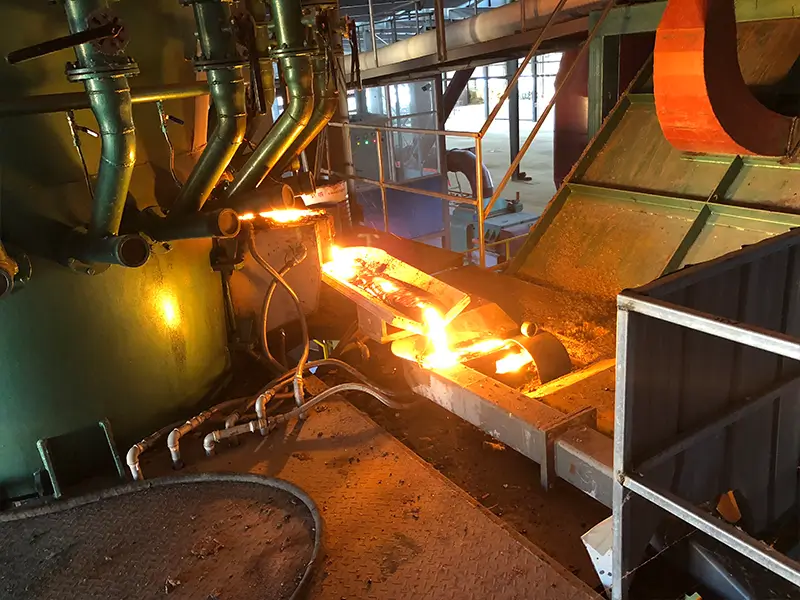
The molten rock stream must enter the centrifuge at a consistent temperature, flow rate, and trajectory. A furnace from supplier A may deliver the right temperature and flow rate at the tap hole, but the stream trajectory and the distance to the centrifuge intake may not match supplier B’s design assumptions. The result is splashing, premature cooling, or uneven distribution across the centrifuge wheels — all of which degrade fiber quality. Fixing this interface can require modifying the furnace tap hole geometry, adding a heated launder (trough), or repositioning the centrifuge — modifications that cost $20,000-50,000 and add weeks to commissioning.
Control System Unification
A turnkey line runs on a single, unified control platform. Every machine reports to the same SCADA system. Alarms, process data, and production statistics flow through one interface. A multi-vendor line may have a Siemens PLC on the furnace, a Mitsubishi PLC on the centrifuge, and an Allen-Bradley PLC on the curing oven. Making these communicate reliably requires protocol converters, custom data mapping, and extensive testing — costs that are rarely fully scoped in the initial equipment budgets.
Throughput Matching
A furnace rated at 5 tons per hour, a centrifuge rated at 5 tons per hour, and a curing oven rated at 5 tons per hour should, in theory, form a balanced line. In practice, each machine’s rating is based on different operating assumptions — melt composition, fiber density target, board thickness, and line speed. A centrifuge that achieves 5 tons per hour with standard-density board may drop to 3.5 tons per hour with high-density product, creating a bottleneck that renders the excess furnace and curing oven capacity useless. Turnkey suppliers design throughput balance into the system architecture. Multi-vendor buyers must calculate it themselves, and miscalculations are expensive.
After-Sales Support and Warranty
Turnkey contracts typically include a comprehensive warranty covering all equipment for 12-24 months, with a single service hotline and guaranteed response times. Piecemeal procurement means managing separate warranties from each vendor, each with different coverage periods, exclusions, and service response commitments.
The practical difference emerges during the first major breakdown. In a turnkey line, the buyer calls one number. The turnkey supplier dispatches a technician who knows how every machine interacts and can diagnose a furnace-caused problem that shows symptoms at the curing oven. In a multi-vendor line, the buyer must first diagnose which machine is the root cause — not always obvious — then call that vendor, then wait for their technician to travel to the site. If the technician arrives and determines the root cause is actually in the upstream or downstream equipment from a different vendor, the clock resets.
Spare parts management also differs. A turnkey supplier maintains a recommended spare parts list for the entire line and often stocks critical spares in a regional warehouse. A multi-vendor buyer must manage separate spare parts inventories, separate reorder processes, and separate minimum stock levels for each equipment category. The administrative overhead is significant, and the risk of being caught without a critical spare — a centrifuge wheel, a furnace refractory brick, a curing oven burner — is higher because no single vendor has visibility into the full spare parts picture.
The rock wool centrifuge maintenance example illustrates the after-sales gap concretely. A centrifuge spinning at 8,000 RPM with molten rock at 1,500°C is the hardest-working component in the entire line. When it fails, the line stops. A turnkey supplier who also built the furnace and curing oven can coordinate a centrifuge repair with minimal disruption because they understand the full process context. A standalone centrifuge vendor can fix the centrifuge, but they cannot advise on whether the failure was caused by upstream temperature instability from the furnace — a question that matters for preventing recurrence.
Customization Flexibility: Turnkey vs Self-Assembled
Turnkey lines offer configuration flexibility within the supplier’s standard product portfolio — different furnace types, centrifuge configurations, curing oven zone counts, and cutting options — but rarely accommodate fundamental design deviations. Individual equipment procurement allows unlimited customization of each machine to proprietary specifications, which can create competitive advantage for manufacturers who have developed unique process know-how.
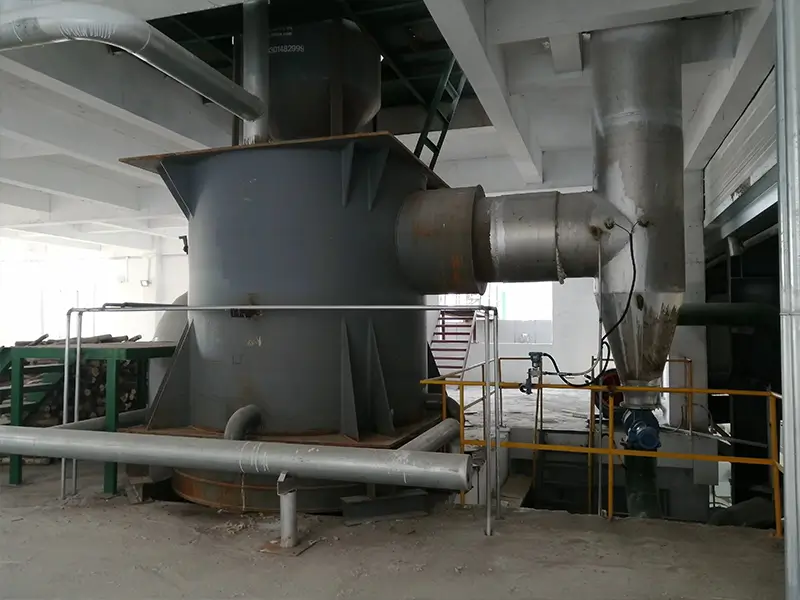
Turnkey suppliers standardize their offerings because standardization is how they manage cost, maintain quality, and meet performance guarantees. A rock wool furnace selection within a turnkey package typically offers a choice between predefined furnace models — a 5-ton-per-hour cupola or a 5-ton-per-hour electric furnace, for instance — each with a fixed set of specifications. The buyer selects from available options rather than designing from scratch. For 80-90% of insulation manufacturers, this is entirely sufficient because their production requirements fall within the normal range of commercial rock wool products.
The remaining 10-20% of manufacturers operate at the edges of standard specifications. They may produce ultra-low-density boards for acoustic ceiling tiles requiring a radically different fiber collection and curing approach. They may use a proprietary binder formulation that demands a non-standard curing temperature ramp that no turnkey supplier’s standard oven can deliver. They may target a niche product like rock wool pipe sections that require specialized forming equipment not included in any standard line configuration. For these manufacturers, buying individual equipment and engineering the integration themselves is not a cost-saving tactic — it is a strategic necessity driven by product differentiation.
A hybrid model is increasingly common: buy core process equipment (furnace, centrifuge, curing oven) from a turnkey supplier who guarantees the critical hot-end integration, and source peripheral equipment (packaging machines, palletizers, dust collection systems) independently to save cost or match specific site requirements. This preserves the integration guarantee on the equipment where interfaces matter most while allowing competitive bidding on standardized utility equipment.
Which Option Suits Your Business Model?
First-time rock wool manufacturers and investors entering a new geographic market should default to a Turnkey Rock Wool Production Line unless they have compelling reasons — not just cost ambitions — to self-integrate. Established manufacturers with experienced process engineering teams and unique product specifications gain more from individual equipment procurement because they can leverage their internal expertise to optimize each machine and already understand the integration risks they are managing.
The decision framework below maps three buyer profiles to the procurement model that best matches their capabilities and risk tolerance.
Buyer Profile to Procurement Model Matching
| Buyer Profile | Recommended Model | Rationale |
|---|---|---|
| First-time manufacturer entering rock wool market | Turnkey | No in-house process knowledge; needs performance guarantee; cannot afford integration learning curve |
| Established insulation manufacturer expanding to new region | Turnkey with customization options | Has process knowledge but lacks regional engineering team; wants predictable timeline for market entry |
| Investor group with no manufacturing experience | Turnkey | Full reliance on supplier expertise; performance guarantee protects investment return projections |
| Manufacturer with proprietary process technology | Individual equipment | Custom specifications are core competitive advantage; integration capability exists in-house |
| Existing rock wool producer adding a second line | Individual or hybrid | In-house team can replicate first-line integration; spare parts and training infrastructure already built |
| Manufacturer targeting niche product specifications | Individual equipment | Standard turnkey configurations will not meet niche product requirements |
The threshold question is not “which option is cheaper on paper.” It is “does my organization have the process engineering depth, project management bandwidth, and risk tolerance to absorb integration responsibility?” If the answer to any of those three is uncertain, the turnkey premium is insurance worth paying. If the answer to all three is an unambiguous yes, individual equipment procurement can yield a more optimized, lower-cost production line — provided the buyer is disciplined about budgeting realistically for integration costs and timeline buffers.
Conclusion
The choice between a Turnkey Rock Wool Production Line and individual equipment procurement is fundamentally a choice about who bears integration risk. A turnkey contract transfers that risk — and the project management burden that accompanies it — to a supplier with decades of experience coordinating furnaces, centrifuges, curing ovens, and cutting systems into a single, production-ready facility. The buyer pays a premium for this transfer and receives a predictable timeline and a performance guarantee in return. Individual equipment procurement keeps the integration responsibility with the buyer, who can potentially save 10-30% on equipment costs and achieve greater customization, but must also absorb the very real costs of interface engineering, multi-vendor project management, delayed commissioning risk, and fragmented after-sales support.
Neither model is universally superior. The right model is the one that matches the buyer’s internal capabilities. A buyer who cannot credibly manage the furnace-to-centrifuge interface, the control system unification, and the curing oven throughput balance should not attempt piecemeal procurement regardless of the theoretical cost savings. A buyer who has done exactly that integration work before, has process engineers who understand every machine’s operating envelope, and knows exactly which product specifications require customization should not pay a turnkey premium for integration they can manage better internally. The honest self-assessment of internal capability is the single most important step in the procurement decision process.
FAQ
Can I start with a turnkey line and later replace individual components with equipment from other suppliers?
Yes, and many manufacturers do exactly this. The turnkey line provides a reliable baseline, and as the in-house engineering team gains experience, specific machines — such as the packaging section or the cutting system — can be upgraded with third-party equipment that offers higher speed, lower energy consumption, or better product handling. The critical hot-end equipment (furnace and centrifuge) is rarely replaced because the integration complexity and performance risk are highest there.
How do I verify a turnkey supplier’s performance guarantee before signing?
Request site visits to reference factories that have been running for at least two years. Ask for production data — not marketing claims — on actual annual output, fiber quality consistency, energy consumption per ton, and unplanned downtime hours. A credible turnkey supplier will provide verifiable references. Also require the performance guarantee to specify measurable metrics: tons per day, product density range, fiber diameter distribution, and energy consumption per ton, with clear remedies if the line fails to meet them.
What is the single most expensive integration mistake in piecemeal procurement?
The most common and costly mistake is failing to specify control system communication protocols in every equipment purchase order. When the furnace, centrifuge, curing oven, and cutting section cannot exchange data on a unified SCADA platform, the buyer faces either expensive protocol conversion hardware and custom programming, or the operational nightmare of operators monitoring four separate control stations. This mistake alone can add $40,000-120,000 in unbudgeted integration cost and weeks of commissioning delay.




