
Insulation buyers rarely compare rock wool and glass wool in the abstract. A specification decision locks in a supply chain for years, and the two materials do not travel through the market at the same speed. One is a high-volume commodity sold into residential envelopes. The other is a specification-driven product tied to fire codes, industrial process temperatures, and high-rise facades. Which one the market is pulling harder tells a buyer where lead times will tighten, where prices will soften, and where capacity is being built.
On balance, rock wool shows the stronger demand trajectory, while glass wool still holds the larger volume base. Global mineral wool consumption is growing at roughly 3.8 to 5.2 percent a year, and within that total rock wool expands at about 6 percent against 4 to 5 percent for glass wool. Rock wool also carries a 15 to 25 percent price premium, dominates insulation-grade specifications, and sits in the path of the two strongest demand drivers in the sector: non-combustible construction and industrial thermal management. Glass wool remains the default for cost-sensitive residential volumes, so its tonnage is larger, but its growth is slower and more exposed to housing cycles.
The sections below separate volume from value, map regional demand, and test whether rock wool’s growth advantage survives contact with its own drawbacks.
Rock Wool and Glass Wool at a Glance
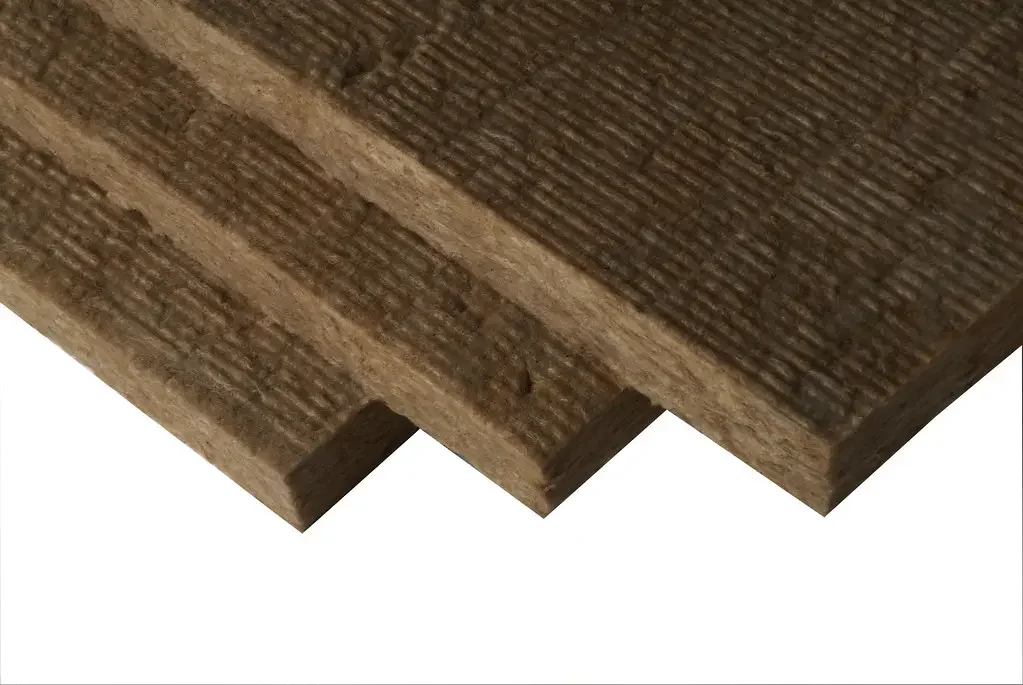
Both materials sit within the mineral wool family and deliver comparable thermal performance. What separates them commercially is raw material cost, density, and high-temperature behaviour.
| Property | Rock Wool | Glass Wool |
| Raw material | Basalt, dolomite, slag | Recycled glass, silica sand |
| Typical density | 40 to 200 kg/m3 | 10 to 100 kg/m3 |
| Thermal conductivity | 0.033 to 0.045 W/mK | 0.030 to 0.040 W/mK |
| Reaction to fire | Euroclass A1, non-combustible | Euroclass A1, non-combustible |
| Service temperature | Above 1000 degrees Celsius | Melts around 600 degrees Celsius |
| Moisture behaviour | Hydrophobic | Absorbs water, needs a vapour barrier |
| Compressive strength | High, used in loaded assemblies | Low, not load bearing |
| Handling | Rigid, heavier, serrated blade | Flexible, light, compresses into cavities |
| Material cost | Higher | Lower |
| Dominant end use | High-rise, industrial, fire-rated | Residential envelope, HVAC, partitions |
Raw Materials and Production Routes
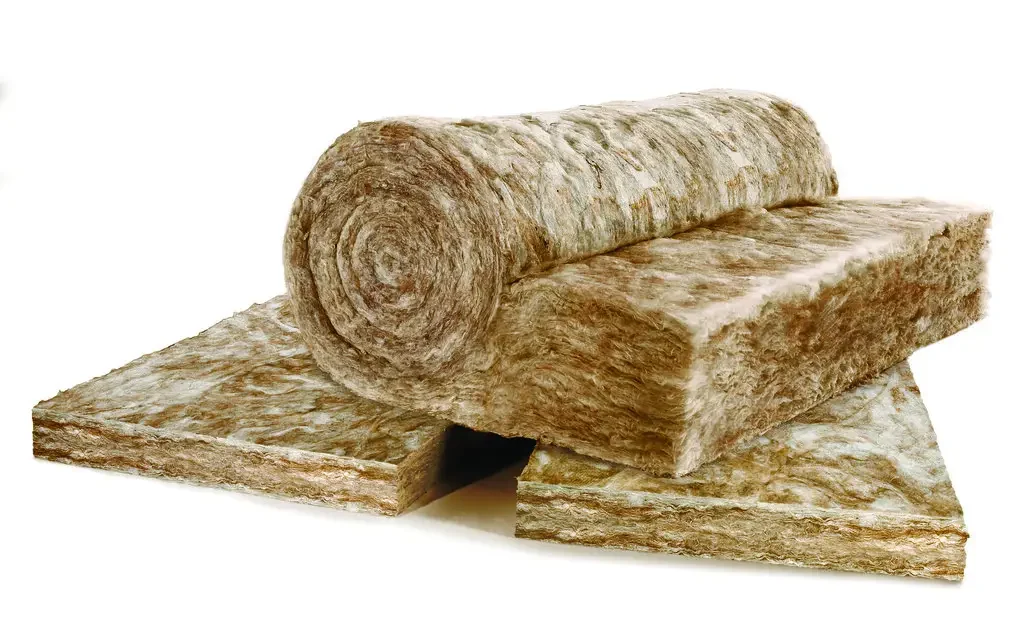
Melting hard rock consumes more energy per tonne and wears furnace refractories faster, so producers run larger, hotter furnaces and accept higher capital intensity. Glass wool melts a lower-temperature batch and tolerates high cullet content, sometimes above 70 percent. Rock wool fibres are shorter and thicker and are bonded into boards; glass wool fibres are longer and finer and are collected into low-density blankets. Buyers auditing a mill certificate will find a fuller breakdown of rock wool composition useful.
Performance Profile That Shapes Demand
Glass wool wins narrowly on thermal conductivity, which is why it dominates applications judged purely on R-value per dollar. Rock wool wins on everything that governs specification in regulated buildings: it keeps its shape when heated, does not shrink away from a fire stop, and holds compressive strength in facade and floor assemblies. Both achieve Euroclass A1, a point often misreported. Glass wool is non-combustible too; the difference is behaviour after the ignition source is removed.
Global Demand: Size, Growth Rate, and Value Share
Glass wool moves more tonnage, rock wool captures more value per tonne and grows faster. Global demand for mineral wool insulation is forecast to reach roughly 10 million metric tons, valued near 11 billion US dollars and expanding about 3.8 percent a year. Broader estimates for all mineral wool materials run from 17 to 22 billion dollars, depending on whether slag wool and non-insulation uses are counted.
Volume vs. Value
Share estimates diverge because research houses define the category differently. One widely cited segmentation puts glass wool near 45 percent of product-type share and stone wool near 39 percent. A narrower segmentation counting only insulation-grade output puts stone wool above 50 percent and glass wool around 35 percent. That is a scope difference rather than a contradiction, and the narrower framing is more useful for procurement because it reflects what actually gets specified.
Growth Rates and Price Premium
The growth spread appears consistently across sources. Stone wool tracks at roughly 6 percent compound annual growth against 4 to 5 percent for glass wool, with the total market moving from about 18 billion dollars in 2025 toward the high twenties by the mid 2030s. The premium behind those returns is real: rock wool prices 15 to 25 percent above glass wool at equivalent thermal performance, and the gap widens for high-density boards. Buyers watching global rock wool demand should read that premium as a capacity signal, because it is what pulls new production lines into the market.
Regional Demand Patterns
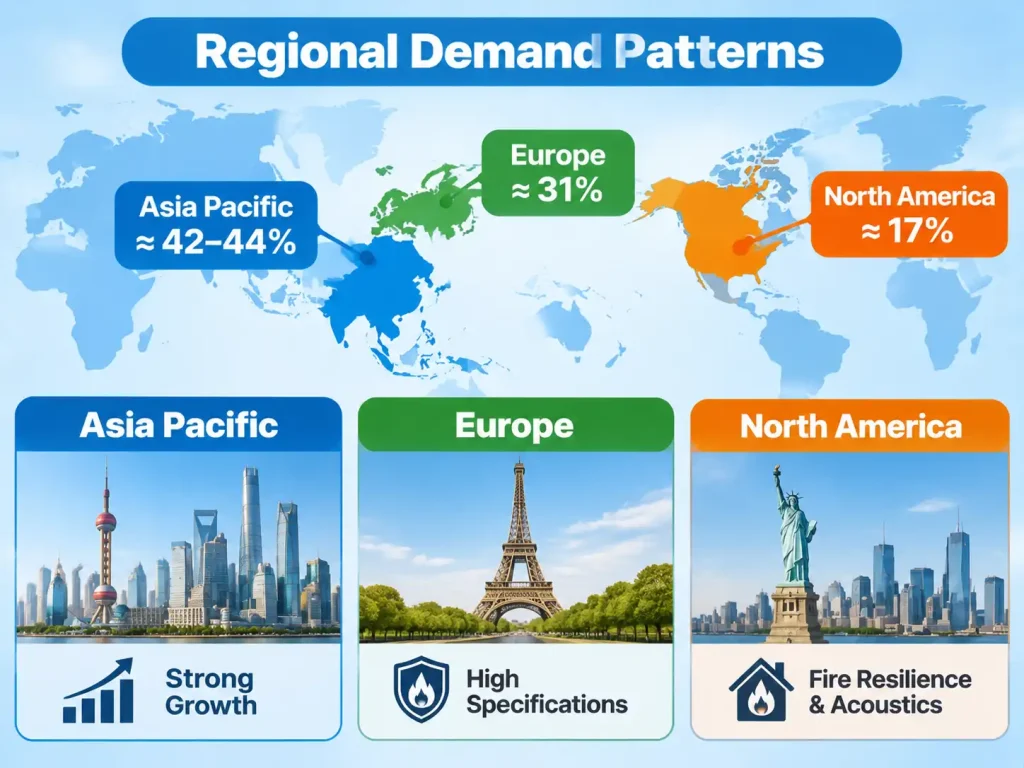
Asia Pacific concentrates volume growth, Europe sets the specification benchmark and unit value, and North America is where fire resilience and acoustics are reshaping the mix.
Asia Pacific
The region accounts for roughly 42 to 44 percent of global mineral wool revenue, and China and India together are expected to deliver around 40 percent of global insulation demand gains. Chinese energy codes and carbon targets have pushed mineral wool into high-rise and premium residential envelopes, where non-combustible facades are increasingly mandatory. India is expanding from a low base and is the fastest-growing single market, while Southeast Asia adds industrial demand as manufacturing relocates.
Europe
Europe holds around 31 percent of global revenue and is the most specification-driven market. The recast Energy Performance of Buildings Directive sets minimum energy performance standards for the worst-performing buildings by 2030, and renovation rates are being pushed toward 3 percent a year. Regional fire codes make non-combustible mineral wool insulation close to the default in mid and high-rise work. Buyers sourcing for European projects should expect documentation on reaction to fire and recycled content that goes well beyond other regions.
North America and Emerging Markets
North America represents around 17 percent of revenue and is growing fastest from a smaller base, pulled by wildfire-exposed construction, stricter envelope requirements, HVAC production, and data centre build-out. In the Middle East and Africa, demand leans on industrial process insulation and infrastructure rather than residential retrofit, so rock wool grades dominate.
Segment Demand: Where Each Material Wins
Glass wool wins the residential envelope, retrofit, and HVAC volume. Rock wool wins high-rise facades, fire-rated compartmentation, industrial process insulation, marine, and acoustically critical spaces. Neither is losing ground in its own segment, which is why both keep growing as their growth rates diverge.
Building Envelope and Residential Retrofit
This is glass wool’s home market. Blanket and loose-fill formats fill timber and steel stud cavities quickly, compress for transport, and cost less per square metre. In retrofit work, where access is awkward and labour dominates the budget, flexibility matters more than compressive strength. Rock wool competes here only where the assembly needs a fire rating, a moisture-tolerant layer, or acoustic separation between dwellings.
High-Rise, Infrastructure, and Industrial Insulation
Rock wool’s advantage compounds as temperature and fire risk rise. Facade fire barriers, shaft and duct compartmentation, and structural steel protection all specify non-combustible boards that stay in place when tested. Industrial demand adds pipe and vessel insulation above 600 degrees Celsius, furnaces, and petrochemical facilities. Rock wool applications in these settings are less price-sensitive, because the insulation is a small fraction of the asset it protects.
Which Is Better, Rock Wool or Glass Wool?
Neither is better in the abstract. Rock wool wins when fire rating, moisture exposure, acoustic separation, or high service temperature govern the specification. Glass wool wins when thermal target, budget, and installation speed govern it. Most large projects end up using both, applied by assembly rather than by building.
| Project Priority | Better Choice | Reason |
| Lowest material cost | Glass wool | 15 to 25 percent cheaper at equal performance |
| Fire-rated facade or fire stop | Rock wool | Holds integrity above 1000 degrees Celsius |
| Moisture-prone assembly | Rock wool | Hydrophobic, no vapour barrier dependency |
| Irregular or narrow cavities | Glass wool | Flexible, compresses and recovers |
| Acoustic separation between units | Rock wool | Higher density, better low-frequency absorption |
| High-temperature pipework | Rock wool | Service temperature far above glass wool |
| Fast retrofit of a large attic | Glass wool | Light, quick to install, low labour cost |
Rock Wool vs. Fiberglass: The Same Comparison Under a Different Name
In North American usage, glass wool is usually called fiberglass insulation, and the engineering comparison is identical. The naming split matters for sourcing: buyers searching for fiberglass will be quoted glass wool under a different label, with R-value expressed per inch rather than lambda per metre kelvin. Convert to a common density and lambda basis before comparing quotes, or the apparent price advantage is usually just a difference in thickness.
What Are the Disadvantages of Rock Wool Insulation?
Rock wool’s drawbacks are weight, price, installation irritation, and moisture behaviour once saturation is reached. Each limits how far the material penetrates cost-sensitive and labour-sensitive markets, which is why its growth, while faster, is not faster still.
At 40 to 200 kilograms per cubic metre against 10 to 100 for glass wool, rock wool raises freight cost per square metre and often needs two installers on large boards. Installation is uncomfortable: fibres irritate skin, eyes, and airways, so crews need gloves, eye protection, and respiratory protection, which slows the work. Moisture behaviour is more nuanced than marketing suggests. Rock wool is hydrophobic, but a fully saturated board loses thermal performance until it dries, and repeated wetting can degrade the binder. Rigid boards also fit curved surfaces poorly, so cut waste rises in retrofit work. The disadvantages of mineral wool deserve a review before writing a specification that assumes rock wool everywhere.
Price Difference Between Glass Wool and Rock Wool Insulation
Rock wool costs roughly 15 to 25 percent more than glass wool at equal thermal performance in bulk supply, and 30 to 50 percent more for high-density boards. The gap narrows once installation and service life are counted, and widens wherever freight distance is long, because rock wool pays a density penalty on every truckload.
| Cost Element | Glass Wool | Rock Wool |
| Bulk blanket, 50 mm, ex-works | 0.2 to 0.7 USD per square metre | 1.1 to 4.6 USD per square metre |
| Retail roll or batt | 6 to 15 USD per square metre | 8 to 18 USD per square metre |
| Installation labour | Lower, one installer possible | Higher, heavier and slower |
| Compression for transport | Up to 1:5, high payload efficiency | Lower, more trucks per project |
| Behaviour over service life | Compresses in humid assemblies | Holds thickness |
What Drives the Gap
Four factors set the spread. Melting energy per tonne is higher for rock. Density raises logistics cost at every stage. Capital intensity is greater, since rock wool lines need larger furnaces and heavier downstream handling. And specification demand supports the premium, because fire-rated assemblies have few substitutes. Start from what determines the average price of glass wool, then apply the rock wool premium by grade rather than as a single percentage.
What Better Demand Means for Buyers and Producers
Stronger rock wool demand changes bargaining position more than specification logic. Buyers should expect firmer pricing and longer lead times on high-density and fire-rated grades, and should build supply redundancy before a schedule depends on one mill. Producers should read the same signal as a capacity opportunity in Asia Pacific and the Middle East, not in mature European markets where share shifts more than it grows.
For buyers, qualify two suppliers per grade, one regional and one import, and test both against the same density tolerance and reaction-to-fire certificate. Lock price on the slowest-moving grades rather than across the whole bill, and verify declared lambda at the mean temperature the assembly will actually see. For producers, the demand pattern argues for lines that hold density tolerance at speed, because the premium is earned on consistent board quality rather than nominal capacity.
Frequently Asked Questions
Can one production line switch between rock wool and glass wool?
Not at the melting stage. The two products need different raw material batches, furnace temperatures, and fibre collection settings, so the furnace and fibre-forming section are effectively dedicated. Downstream equipment such as the pendulum, curing oven, and cutting line is largely shared, which is why capacity decisions are made per material rather than per plant.
Is demand growing faster in retrofit or in new construction?
It depends on the region. In Europe, retrofit dominates under minimum energy performance standards and renovation incentives, and the mix skews toward mineral wool because the work happens in occupied buildings with strict fire requirements. In Asia Pacific, new construction dominates and volume growth is larger. Globally, new build still accounts for most tonnage, but retrofit grows faster in value because it specifies thicker, better documented products.
What should buyers verify first when comparing rock wool and glass wool quotes?
Start with four items: declared density with tolerance, reaction-to-fire classification backed by a test report rather than a datasheet claim, thermal conductivity at the mean temperature of the assembly, and moisture resistance for the intended exposure. Then confirm compression ratio and pallet configuration, because those drive landed cost more than the unit price does.




