
A mineral wool factory moves hundreds of tonnes of basalt, slag, dolomite and coke through a single continuous route every day: storage, batching, melting at around 1500 degrees Celsius, fiberizing, collection, curing, cutting and packing. Every one of those steps releases something into the air, but not the same thing. The front of the line releases dry mineral dust from handling and melting. The middle releases hot, sticky smoke loaded with phenol, formaldehyde and condensable organics from the collection chamber and curing oven. The back end releases fine fibre and filler dust from saws, trimmers and packaging. Plants that treat all of it as one problem usually end up with a filter that blinds in a month and a stack that still fails.
Dust and smoke in a mineral wool factory are controlled through a four-stage sequence: keep material inside closed equipment, pull air away from every transfer, cutting and furnace point with local exhaust, treat that air with fabric filtration for dry dust and with wet electrostatic precipitation plus thermal oxidation for hot condensable smoke, and hold the whole train at its design airflow through scheduled maintenance. No single device handles both streams, which is why an end-of-pipe filter bought on its own rarely achieves compliance.
The sections below follow the process route from the raw material bunker to the finished pallet and identify what has to be captured at each step, and with what.
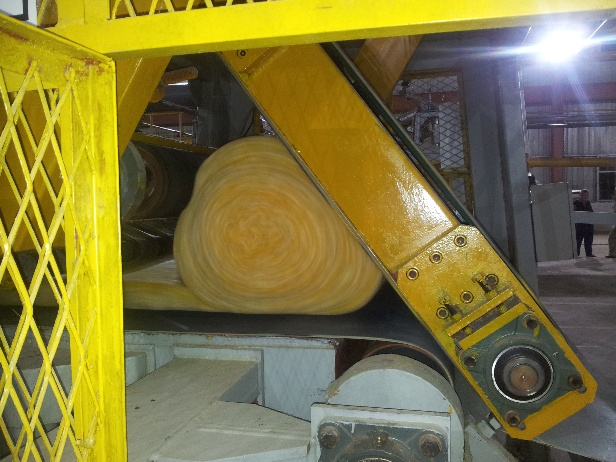
Where Dust and Smoke Come From in a Mineral Wool Factory
Dust is generated wherever solid material is crushed, dropped, conveyed or cut, and smoke is generated wherever molten rock and resin binder are hot. The melting furnace stack is the largest single emission point on the site, while the collection chamber, curing oven and cutting line produce the emissions that are hardest to capture because they are hot, wet and sticky.
The American process description in the AP-42 emission factor compilation for mineral wool manufacturing is still the clearest map of the problem: the cupola or furnace stack is identified as the major emission source, discharging condensed fumes, particulate matter volatilised from the melt, sulphur dioxide, nitrogen oxides, carbon monoxide and fluorides, with the blowchamber, curing oven and cooler treated as minor particulate sources and the blowchamber, curing oven and cooler as the main sources of volatile organic compounds. That hierarchy matters for budgeting, because it tells you where a single well-designed capture point buys the most reduction.
| Process stage | Main airborne stream | Dominant pollutants | Typical capture approach |
| Raw material receipt, crushing, screening | Fugitive and ducted dust | Mineral particulate, respirable crystalline silica | Enclosed bunkers, sealed transfer points, local exhaust |
| Batching and charging | Dust puffs at drop points | Fine mineral dust, coke fines | Enclosed weigh hoppers, extraction at the charging chute |
| Melting furnace | Hot flue gas and fume | Particulate, SO2, NOx, CO, H2S, fluorides | Sealed furnace, ducted to bag filter or ESP |
| Fiberizing and collection chamber | Hot, humid, sticky smoke | Fibre fly, oil mist, phenol, ammonia, VOC | Negative pressure enclosure plus wet ESP or slab filtration |
| Curing oven | Hot organic-laden exhaust | Phenol, formaldehyde, VOC, ammonia, CO | Thermal oxidiser with heat recovery |
| Cooling, trimming, sawing | Dry fibre and filler dust | Respirable fibre, stone dust, binder dust | Hooded saws, local exhaust, pneumatic trim removal |
| Packing and palletising | Nuisance dust | Fibre and dust from cut edges | Local exhaust at the wrapping station |
Dust sources: raw materials, fiberizing and finishing
Raw material handling is the most under-estimated source in most plants. Basalt and slag arrive by truck or ship, get tipped into bunkers, crushed, screened and weighed, then travel by belt or skip to the furnace. Every transfer has a drop point, and every drop point produces a dust puff proportional to the height of the fall and the air movement around it. Because these materials contain quartz-bearing rock, the dust is a silica exposure issue as well as a housekeeping issue, and dry sweeping simply converts settled dust back into respirable airborne dust.
Fiberizing adds a second, less obvious source. During spinning, not every molten globule becomes fibre. The non-fibreised globules, known as shot, can account for a large fraction of the raw wool mass before separation, and the separation and conveying equipment that removes them generates both coarse granulate and fine dust. Downstream, longitudinal and cross saws, edge trimmers and the trim-removal air system produce the finest and driest dust on the site, and that dust travels furthest.
Smoke sources: melting furnace, collection chamber and curing oven
Smoke in this industry is not dust with a different name. Furnace flue gas carries volatilised compounds that condense as they cool, so a large part of the particulate mass only exists as particulate after the gas leaves the furnace. Collection chamber exhaust is warm, humid and loaded with fibre fly, mineral oil mist and atomised binder, which makes it adhesive. Curing oven exhaust carries the products of binder cure, principally phenol, formaldehyde, ammonia and other organic compounds, and it is hot enough that the organics stay in the vapour phase until the gas cools.
These three characteristics, submicron size, condensability and stickiness, set the equipment choice. A dry fabric filter that works perfectly on cutting dust will blind rapidly on untreated collection chamber smoke unless the gas is conditioned first, and no fabric filter removes formaldehyde at all.
Why Uncontrolled Dust and Smoke Cost More Than Abatement Equipment
Uncontrolled emissions create three costs that grow faster than any equipment budget: permit and compliance risk at the stack, occupational exposure to respirable dust and to phenol and formaldehyde in the working area, and accelerated wear on fans, heat exchangers and ductwork that shows up as unplanned downtime and rising reject rates.
The compliance side is measurable and increasingly harmonised. The European BAT reference document for glass and mineral wool manufacturing sets out the techniques regulators treat as best available, and the associated emission levels for dust from melting furnaces sit in the range of roughly 5 to 30 milligrams per normal cubic metre depending on furnace type and abatement, with downstream forming and curing stages held to comparable figures. A plant designed without those numbers in the specification has no margin when a permit is renewed.
The exposure side is quieter but more expensive over time. Respirable dust and airborne fibre settle in the collection chamber area, the cutting line and the packing station, and phenol and formaldehyde from curing oven leaks are irritants at low concentration and regulated substances at higher ones. Ventilation that is adequate for a warehouse is not adequate for a curing oven discharge.
The equipment side is where most plants first notice the problem. Dust that passes a failed filter abrades fan impellers, coats heat recovery surfaces until the thermal efficiency that justified the investment disappears, and contaminates the product surface. Filter media cost is visible; the downtime and the lost heat recovery are not, which is why maintenance budgets are usually set too low.
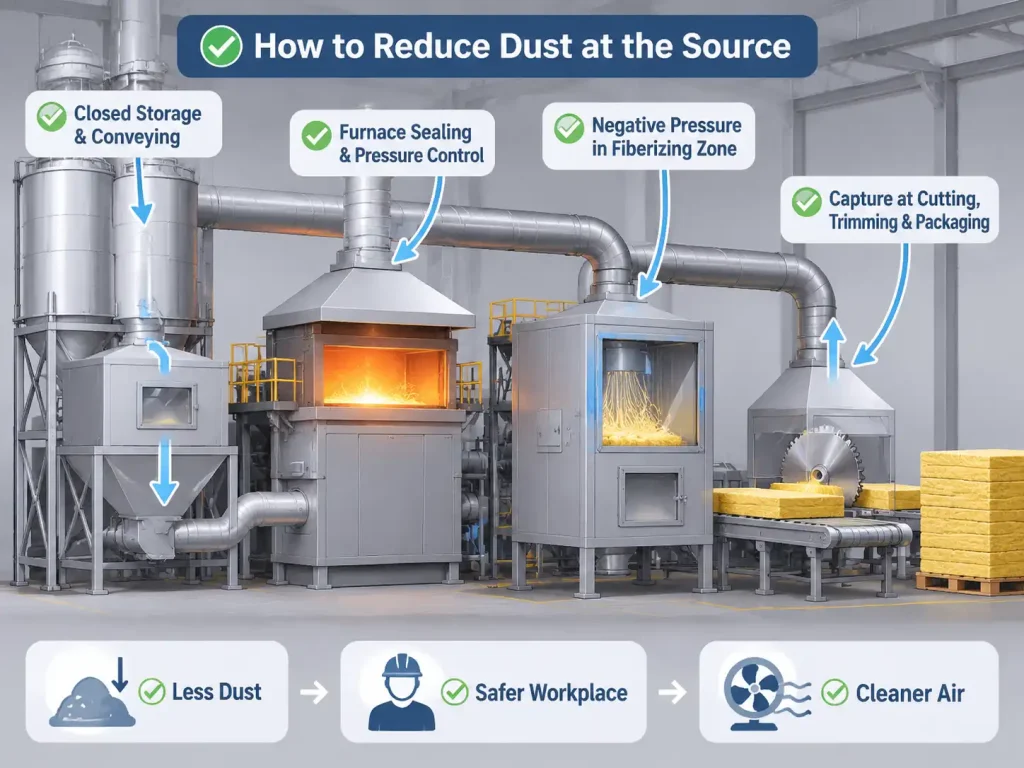
How to Reduce Dust in a Factory at the Source
The cheapest kilogram of dust is the one that never becomes airborne. In a mineral wool factory that means enclosing storage and conveying, sealing the furnace shell and tapping points, holding the fiberizing and collection zone under negative pressure, and capturing at the saw blade or trimmer rather than trying to ventilate the whole hall.
Closed storage, batching and conveying
Every open transfer is a dust source. Enclosed bunkers with dust extraction on the discharge, enclosed weigh hoppers, sealed belt transitions and pneumatic conveying instead of open chutes remove most of the fugitive dust before it exists. A properly specified ingredient and feeding system closes the loop from silo to furnace charging and gives each drop point a defined extraction connection rather than relying on general ventilation.
Furnace sealing and pressure control
Fugitive smoke around a melting furnace comes from openings: the charging door, the tapping hole, the slag notch and the electrode or burner penetrations. Maintaining slight negative pressure inside the furnace hood, sealing the tapping launder, and enclosing the runner all reduce the volume of smoke that has to be captured and treated. A closed furnace shell also cuts the radiant heat load on the working platform, which improves operator conditions independently of the emission benefit.
Negative pressure in the fiberizing and collection zone
The collection chamber is the single most difficult enclosure on the line because it must admit fibre, allow visual access and still contain a humid, sticky aerosol. The workable approach is a sealed chamber held at a controlled negative pressure, with the exhaust taken from the point where the aerosol is most concentrated and the makeup air introduced where it does not disturb fibre laydown. Air volume here is driven by the need to contain, not by the need to cool.
Capture at cutting, trimming and packaging
Saws and trimmers need a hood that encloses the blade as closely as the product dimensions allow, with extraction taken from both sides of the cut. Trim offcuts are best removed pneumatically rather than by hand, because a pneumatic trim system is both a conveying system and a capture system. At the packing station, extraction at the wrapping and stacking point controls the residual dust released when cut edges are handled.
The Most Common Dust and Smoke Control Methods in a Mineral Wool Factory
Five methods cover almost every installation: enclosure with negative pressure, local exhaust ventilation, fabric filtration, wet electrostatic precipitation and thermal oxidation, supported by water-based suppression and disciplined housekeeping for the fugitive dust that escapes all of them.
| Method | Best suited to | Main advantage | Main limitation |
| Enclosure and negative pressure | Collection chamber, transfer points, saws | Stops dust entering the workplace at all | Needs careful makeup air and access design |
| Local exhaust ventilation | Furnace hood, saws, packing | Captures at source with small air volume | Sensitive to hood distance and duct imbalance |
| Fabric filtration | Furnace flue gas, dry cutting dust | High removal efficiency across a wide size range | Blinds on sticky or wet gas, fire risk with binder dust |
| Wet electrostatic precipitation | Collection chamber and curing smoke | Handles submicron, condensable and adhesive aerosol | Water treatment, corrosion, higher operating cost |
| Thermal oxidation | Curing oven exhaust | Destroys phenol, formaldehyde and VOC | Fuel cost, needs heat recovery to be economic |
Enclosure and negative pressure
Enclosure is the only method that works on all three size fractions at once, because it prevents escape rather than capturing after escape. Its effectiveness depends almost entirely on airflow direction: air must move from the operator side into the enclosure, never out of it. Access doors, observation windows and product openings all leak, so the design airflow has to account for them.
Local exhaust ventilation and duct design
Ductwork is where good intentions fail. Long horizontal runs accumulate dust, unbalanced branches starve the furthest hood, and sharp elbows create pressure loss that the fan was never sized for. Horizontal runs should be short, branches should be balanced with dampers and measured, and transport velocity in dust-laden ducts must stay high enough to keep material moving without being so high that it abrades the duct.
Fabric filtration with bag filters
Fabric filtration is the default choice for furnace flue gas and dry cutting dust because it delivers high efficiency on a broad particle size range at a predictable pressure drop. Media selection decides service life: temperature rating, resistance to hydrolysis in humid gas, resistance to acid attack where sulphur is present, and surface treatment for sticky dust. Air-to-cloth ratio, the volumetric flow divided by the cloth area, is the parameter that separates a filter that lasts three years from one that lasts six months. A correctly sized industrial bag filter for mineral wool duty is specified on filtered gas volume at operating temperature, not on nominal fan capacity.
Wet electrostatic precipitation for sticky smoke
Where the aerosol is submicron, adhesive or condensing, wet electrostatic precipitation is the technique that most reliably holds the emission level, and it is one of the techniques the sector reference document lists for forming and curing stages. The precipitator charges and collects particles onto wetted surfaces that are continuously washed, so the collected material does not build a resistive layer. The trade-off is a water treatment loop and corrosion-resistant construction. A wet electrostatic precipitator is therefore usually specified where dry filtration has already failed or where the permit level cannot be met by fabric alone.
Thermal oxidation for curing oven off-gas
Thermal oxidation destroys the organic fraction rather than transferring it. Temperature, residence time and mixing determine destruction efficiency, and heat recovery determines whether the operating cost is acceptable. Recovering heat from the oxidiser outlet to preheat the curing oven inlet air is what turns an abatement cost into a partial energy credit, and it is the reason the technique is standard on curing ovens in the sector.
Water fogging, suppression and housekeeping
Water-based suppression works by making fine droplets collide with airborne particles so that the agglomerated mass settles. It is effective at stockyards, unloading areas and roadways, which is why open-pit and quarry operations rely on it, but inside a plant it has limits: the droplets evaporate, the effect ends, and the water adds moisture to a process that already struggles with condensation. Inside the building, vacuuming with a filtered industrial unit and a written cleaning schedule achieve more than fogging, and they do not add water to the dust.
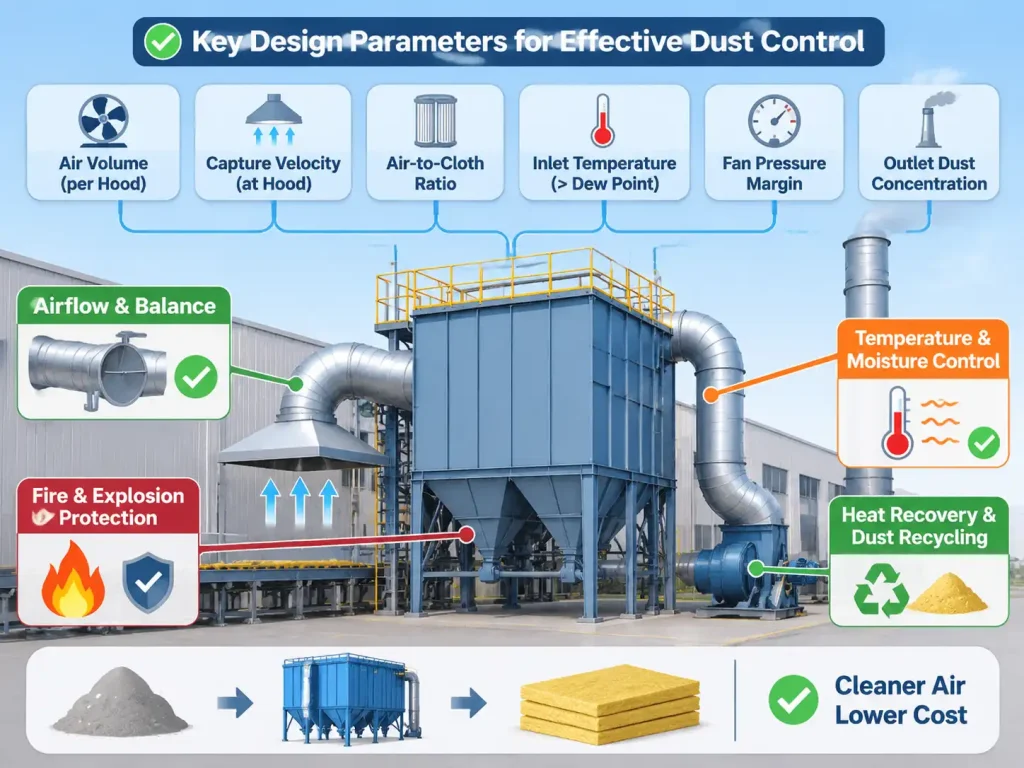
Key Design Parameters Buyers Should Specify
Six numbers decide whether an extraction and filtration system performs: exhaust volume at each capture point, capture velocity at the hood face, air-to-cloth ratio in the filter, inlet temperature relative to the acid dew point, fan pressure margin, and the guaranteed outlet concentration at the stack. A specification that omits any of them leaves the supplier free to optimise cost instead of performance.
| Parameter | What it controls | Indicative range for mineral wool duty |
| Capture velocity at hood | Whether dust enters the hood at all | 0.5 to 1.0 m/s at the point of generation |
| Enclosure face velocity | Containment at doors and openings | 0.5 to 1.0 m/s inward |
| Duct transport velocity | Whether dust settles in the duct | 15 to 20 m/s for dry mineral dust |
| Air-to-cloth ratio | Filter size, pressure drop and bag life | 0.6 to 1.0 m/min for sticky or fine dust |
| Inlet temperature margin | Condensation and bag blinding | At least 20 to 30 degrees above acid dew point |
| Guaranteed outlet concentration | Permit compliance | Set against the local limit, not a generic figure |
Air volume and network balance
Total airflow should be built up point by point from the number of hoods, not estimated from building volume. Add a margin for leakage and for future hoods, but keep the margin modest, because excess airflow on a sticky dust stream increases velocity through the filter and shortens bag life. After commissioning, measure each branch and record the damper position; that record is the baseline for every future fault-finding exercise.
Temperature, moisture and condensation
Condensation is the most common cause of premature filter failure in this industry. Gas leaving a wet or humid stage is close to saturation, and any point in the duct below the water dew point becomes a wet patch that collects dust and sets hard. Insulation, trace heating on long runs, and a startup sequence that brings the gas up to temperature before dust load is introduced all protect the filter. Where sulphur is present, the acid dew point, not the water dew point, sets the minimum metal temperature.
Fire and explosion protection
Mineral fibre itself is non-combustible, but the binder and the resin dust it carries are organic. Phenolic resin dust, fines from the curing oven and oil mist can all burn, and a spark from a saw or a hot particle from the furnace can ignite material accumulated in a duct or hopper. Spark detection with water diversion on the duct, explosion venting on the filter housing, and a strict prohibition on dust accumulation in horizontal runs are standard practice rather than optional extras.
Heat recovery and recycling collected dust
Furnace flue gas leaves at a temperature high enough to justify recovery, and the recovered heat can preheat combustion air, drying air or makeup air. Separately, the dust collected from mineral handling and from the furnace is largely the same chemistry as the raw feed, so it can often be returned to the batch as briquettes or pellets rather than sent to landfill. Both measures improve the economics of the abatement system without changing its emission performance, and both should be evaluated at the design stage because retrofitting them later is expensive.
What Is the Best Method of Dust Control for a Mineral Wool Factory?
There is no single best method. The best result comes from a fixed sequence applied to every source: enclose it, extract it locally, filter it with a technology matched to its temperature and stickiness, and then maintain the system at its design airflow. Plants that skip the first two steps and buy only filtration always spend more for a worse outcome.
| Priority | Measure | Relative capital cost | Contribution to compliance |
| 1 | Enclosure and sealed transfer points | Low to medium | High, and permanent |
| 2 | Local exhaust with balanced ductwork | Medium | High |
| 3 | Fabric filtration on dry and furnace streams | Medium to high | High |
| 4 | Wet ESP and thermal oxidation on smoke streams | High | Decisive where limits are tight |
| 5 | Housekeeping, monitoring and maintenance | Low, recurring | Protects everything above it |
The failure modes are consistent enough to be predictable. A plant installs a filter but leaves the collection chamber open, so the filter is sized for a fraction of the real aerosol load. A plant extracts the hall instead of the source, so air volume is huge, concentration is low and the filter is oversized for no benefit. A plant omits the thermal oxidiser and then discovers that formaldehyde cannot be filtered. A plant designs a good system and then stops changing bags on schedule. The engineering answer to all four is the same: design the whole train as one system, from hood to stack, and treat the mineral wool gas purification system as process equipment with an availability target rather than as a construction add-on.
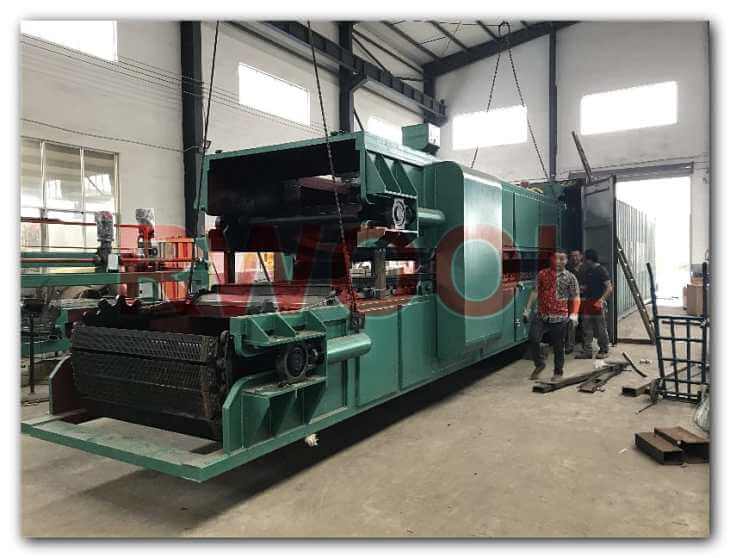
Keeping the System Working: Maintenance and Monitoring
Measured performance of a dust control system is set by maintenance discipline, not by the efficiency printed on the filter datasheet. Most plants that fail a stack test are running equipment that was correctly sized and then left to drift.
Shift and weekly checks
Differential pressure across the filter is the single most informative reading on the system. A rising trend means cleaning is failing or the gas is wet; a sudden drop means a bag has torn or a seal has failed. Alongside it, check fan vibration and current, hopper discharge and ash removal, damper positions against the commissioning record, and visible dust or fume at every enclosure opening.
Bag leak detection and replacement criteria
Bag failure is normal wear, not an exception. Triboelectric or light-scatter leak detectors on the clean gas side locate a failing compartment before the stack monitor sees it. Replace bags on measured pressure drop, visible leakage or elapsed service life, and replace a full row rather than a single bag, because a new bag next to aged bags changes the flow distribution across the compartment.
Stack testing, records and worker protection
Periodic stack testing confirms that the guaranteed outlet concentration is still being met, and the results belong in the same file as the design specification, the commissioning report and the maintenance log. On the working side, local exhaust is the primary control and respiratory protection is the backup, not the substitute; fit testing, training and exposure monitoring are what make the difference between a system that protects workers and one that only protects the permit.
FAQ
Is mineral wool dust harmful to breathe? Mineral wool dust is an irritant rather than a severe respiratory hazard, and rock and slag wool are classified by the International Agency for Research on Cancer in a group that is not classifiable as carcinogenic to humans, in contrast to refractory ceramic fibres which carry a higher classification. The practical risks in a factory are mechanical irritation of skin, eyes and upper airways from airborne fibre, and respirable crystalline silica from the rock fraction of raw material dust. Both are controlled by extraction at source and appropriate respiratory protection during maintenance.
Can the dust collected by the filter be fed back into the furnace? In many cases yes, provided the chemistry is checked first. Dust from mineral handling and furnace flue gas is close in composition to the raw feed, so it can be pelletised or briquetted and returned to the batch, which reduces both disposal cost and raw material purchase. The constraints are sulphur and binder content, which rise when collected dust is recycled, and the risk of fines being re-entrained in the flue gas before they melt. Recycling rates should be set by a mass balance rather than by the capacity of the briquetting unit.
Does a bag filter alone control curing oven smoke? No. A fabric filter removes particulate matter and condensed aerosol, but it does not destroy phenol, formaldehyde or other volatile organic compounds, and curing oven gas is hot enough that much of the organic load is still in the vapour phase at the filter inlet. Curing oven exhaust needs thermal oxidation, with heat recovery to control fuel cost, and often a wet scrubber or wet precipitator downstream to remove the reaction products and any residual aerosol.




