
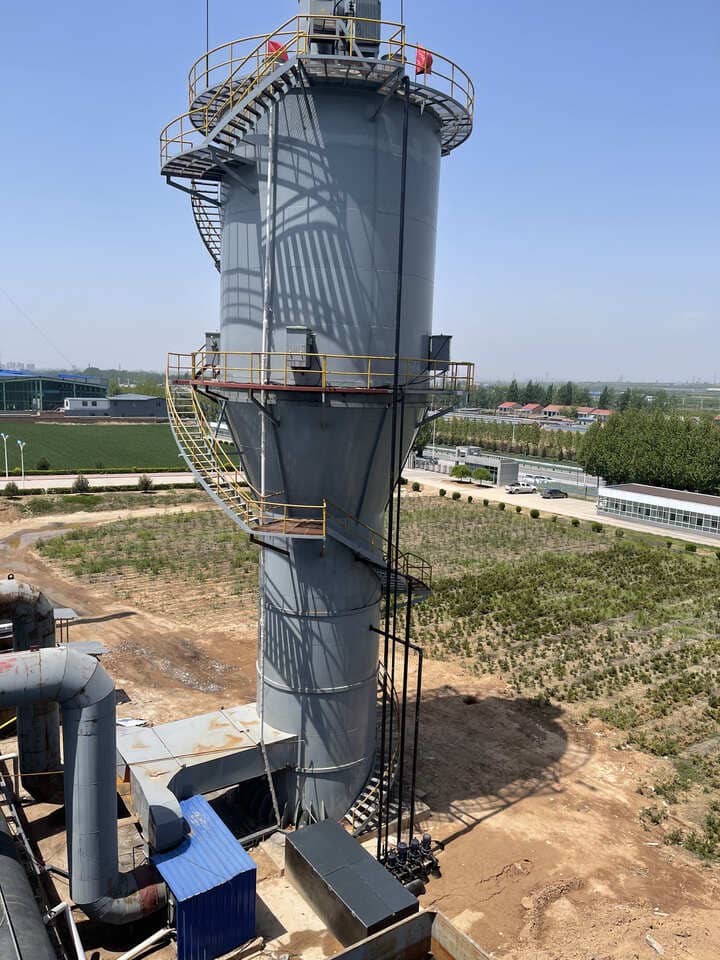
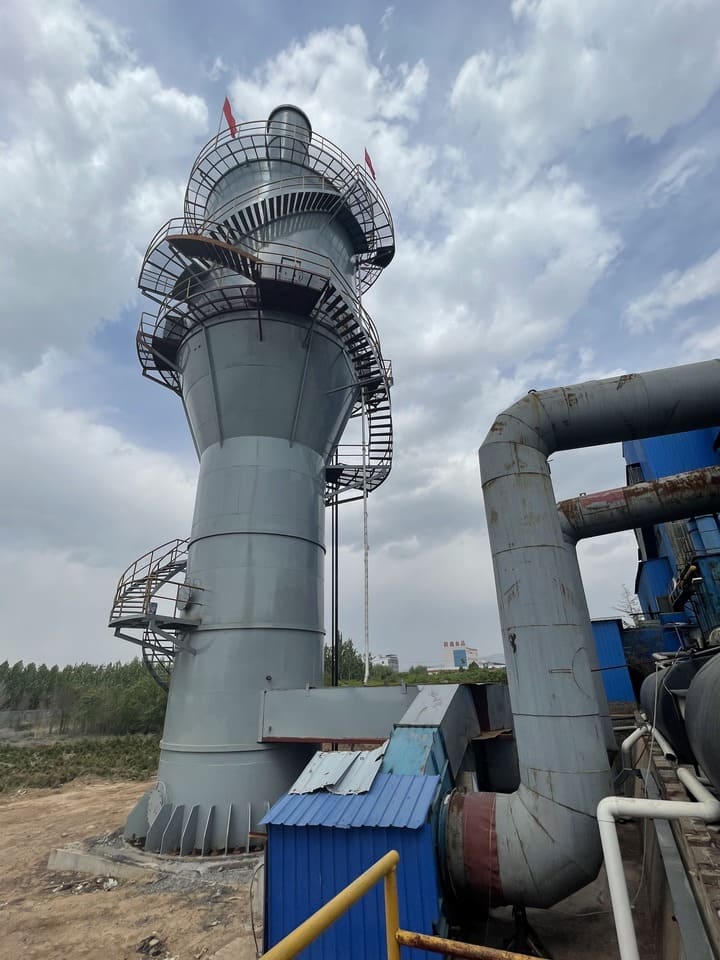

Wet Electrostatic Precipitator
一systems to recover production waste and edge-trims for rock wool
The Wet Electrostatic Precipitator (WESP) is a gas cleaning device designed to remove fine dust particles and liquid mist from industrial exhaust gases. It operates based on electrostatic principles and enhances stability through the use of water as part of the collection and cleaning process.
The dust removal cycle in a WESP follows four core stages:
- Ionization of the gas
- Charging of dust particles by ions
- Migration of charged particles toward the electrodes
- Removal of collected particles from the electrode surface
What differentiates the WESP from dry types is its use of water. The presence of moisture lowers the resistivity of high-resistance dust when mixed with droplets, improving discharge stability and overall efficiency. Instead of using a rapping mechanism for cleaning electrodes, WESP uses water flushing. This eliminates secondary dust re-entrainment and allows for continuous and stable operation.
The system typically consists of a main collection body, electrode assemblies (anode and cathode), an insulator enclosure, water flushing modules, hot air system, and the electrical control cabinet.
Features of the Wet Electrostatic Precipitator
1. Multi-Stage Particle Removal
The dust removal process is based on electrical field principles, beginning with gas ionization and ending with effective capture and washing of particles. This sequential system enables the removal of both solid dust and mist particles.
2. Improved Efficiency for High-Resistivity Dust
When water droplets mix with high-resistance dust, the combined resistivity decreases. This allows for more stable current flow in the discharge area and supports more efficient particle charging and collection.
3. Water-Based Electrode Cleaning
Instead of mechanical rapping, the WESP uses water to flush the electrodes. This prevents re-entrainment of previously captured particles and ensures cleaner and safer downstream gas quality.
4. No Secondary Dust Emissions
Because the dust is flushed away as slurry or solution, there is no mechanical agitation that might release particles back into the gas stream. This is especially useful in applications where strict emission control is required.
5. Complete Structural System
The WESP includes all necessary components for effective operation: main housing, electrode sets, flushing system, air heating system for moisture control, electrical insulation protection, and the full control cabinet for managing process variables.
Applications of the Wet Electrostatic Precipitator
1. Fine Dust and Mist Removal
Ideal for removing both particulate matter and mist droplets from gas streams. The system targets materials that are otherwise difficult to capture using dry methods, improving gas clarity and emission quality.
2. Stable Operation in High-Resistance Dust Conditions
Designed to perform reliably even when processing gases with high-resistivity dust. The presence of water ensures stable current paths, supporting consistent collection without voltage breakdown or corona instability.
3. Emission Control without Re-entrainment
Suited for industrial applications where secondary dust release is unacceptable. By eliminating mechanical rapping and using water-based cleaning, the WESP prevents dust from being reintroduced into the gas path.
FAQ
What pollutants does the WESP remove?
The Wet Electrostatic Precipitator removes fine solid dust particles as well as liquid mist droplets from the gas stream.
How is the collected dust removed from the Wet Electrostatic Precipitator?
Captured dust is removed by water flushing instead of rapping, which prevents secondary emissions.
Why is water used in the WESP process?
Water reduces the resistivity of dust, especially high-resistivity particles, making the collection process more stable and efficient.

