

Longitudinal Cutting Machine: For a 2 - plate production line Longitudinal Cutting Machine: For a 2 - plate production line Read More >
The centrifuge is characterized by compact dimensions, low rated power, and convenient maintenance. Read More >
The chain plates of the thermal polymerization furnace are driven by separate upper and lower single machines, and are controlled synchronously by a frequency conversion PLC. Read More >
Rock Wool
Production Lines
The production of rock wool, also widely referred to as stone wool, mainly uses natural minerals such as basalt and dolomite as raw materials. These minerals are carefully selected and crushed before being fed into high-temperature furnaces. The minerals in the rocks are fully melted to form liquid magma. Subsequently, this liquid magma is fed into high-speed centrifugal equipment. Through high-speed rotation and spraying, the magma is fibred, forming fine rock wool fibres.
Machinery for Rock Wool Production Line
Machinery for rock wool production line applications is developed to support the full manufacturing process of insulation products used in construction and industrial sectors. Since rock wool is also widely known as stone wool, this equipment may also be referred to as stone wool production line machinery in Most markets.

Ingredient and Feeding System
Raw materials are screened, measured, and fed into the feeding system. The total weight of each feeding of coke and slag is 180-250Kg/time, with a rising speed of 9 meters per minute and a feeding volume of 0.3-0.4 cubic meters.
Batching machine:
Four storage hoppers, four vibrating screening hoppers, and matching conveying and weighing devices. There are several models of batching machines available.
Single scale cumulative metering single belt conveyor type (four bucket), equipped with 4 vibrators, 4 sensors, 1 belt conveyor, single PLC, single color instrument control.
Multi scale individual metering multi belt conveyor type (four bucket), equipped with 4 vibrators, 16 sensors, 4 weighing belt conveyors, 1 belt conveyor, single PLC, color display screen control.
Multi scale individual metering multi belt conveyor type (five bucket).
Electric Furnace
1.Output: Annual output is 30,000 tons.
2.Model: XTLI-ELFAC-5975M3-4050T Rock Wool Specific Cold – Slag Arc Furnace MARK-III
3.Parameters:
(1) Finished product output: 4.0 – 5.0 tons of rock wool per hour (acidity coefficient: 1.6 – 2.0);
5.0 – 6.0 tons of mineral wool per hour (acidity coefficient: 1.0 – 1.5).
(2) Non – standard furnace transformer: 8000KVA.

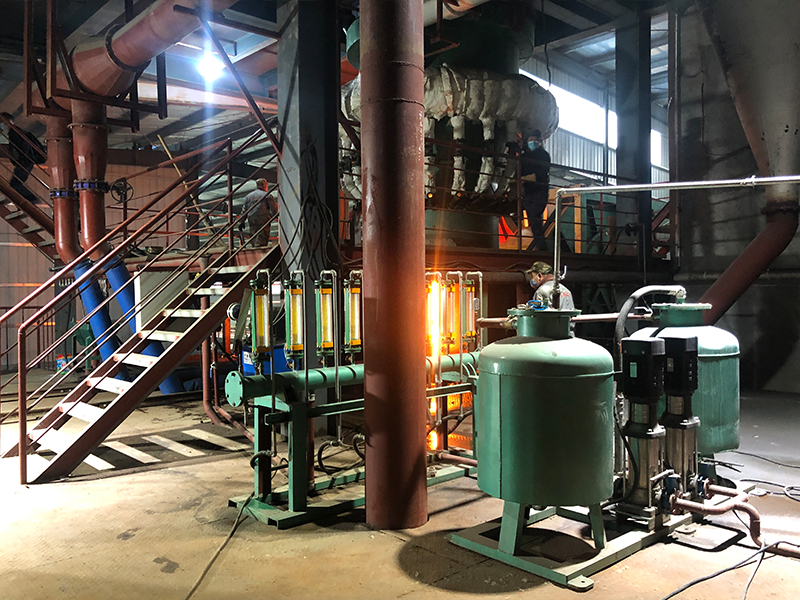
Energy-saving Closed Cupola Melting Furnace
Using new technology, the cupola melting furnace is fully closed for production, and the cooling water is completed by the principle of natural circulation. The melting furnace adopts an upper and lower double body closed structure, and the exhaust gas does not leak and discharge, so as to enter the rear exhaust gas treatment system. In the case of not equipped with incineration heat exchange system, the temperature will increase by 80~120℃ through the double-layer stainless steel preheating heat exchanger (non-incineration) on the top of the melting furnace, and then enter the air belt of the melting section through four hot air pipes, which is stable furnace temperature.
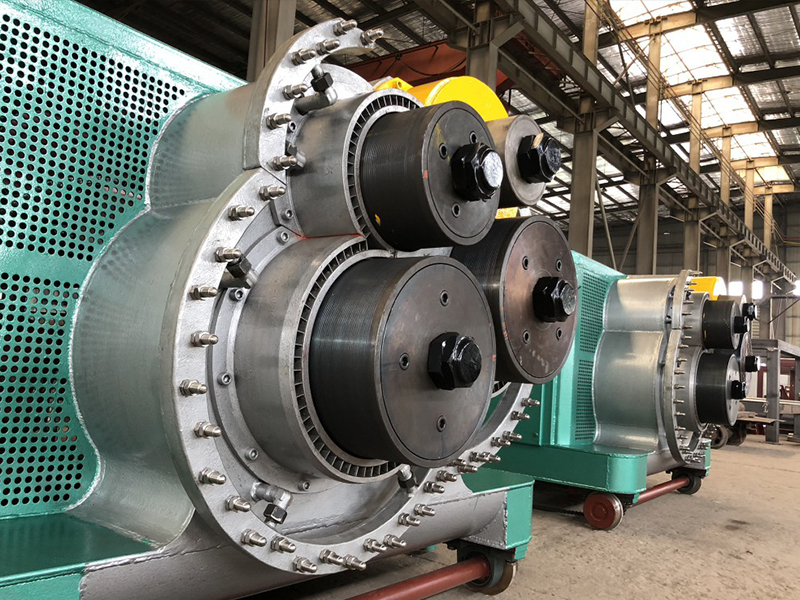
Centrifuge
The centrifuge is characterized by compact dimensions, low rated power, and convenient maintenance.
- Optimized arrangement of the air – ring ensures stable operation relative to the center of rotation.
- The direction of the air flow is stable, minimizing the formation of fiber bundles.
- It can form thin and long fibers at high speed.
- The nozzles of the melt distributor have a drop – like shape, ensuring uniform distribution and fineness of the melt.
- Leading in its field in China
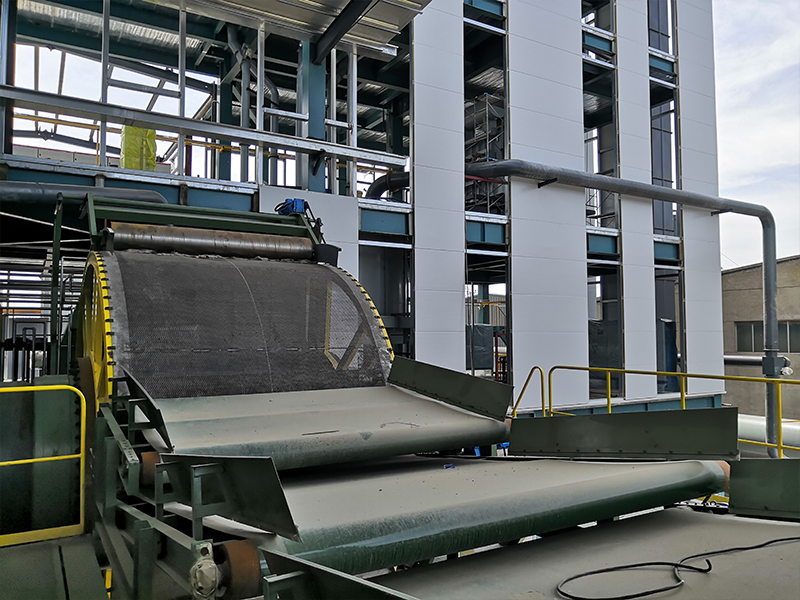
Single Drum Cotton Collector
The conveying speed can be increased by one level and become faster, ranging from 40 to 100 meters per minute. The actual application range is 40 to 90 meters per minute.
The conveying speed and the speed of the pendulum for laying cotton are operated by a digital display synchronous PLC, and the speed can be adjusted arbitrarily.
The cotton collection chamber has a large volume, and the sizing uniformity reaches 99%. The cotton layer is thin, uniform, and there are no agglomerations.
Pendulum System
- Output temperature of colloidal cotton is low, and the thickness of the cotton layer is consistent.
- Output runs synchronously with the pendulum speed.
- The pendulum lays the cotton quickly, the cotton layer is thin and the layers are many.
- 16 to 20 times/layer per minute when producing low and high density boards.
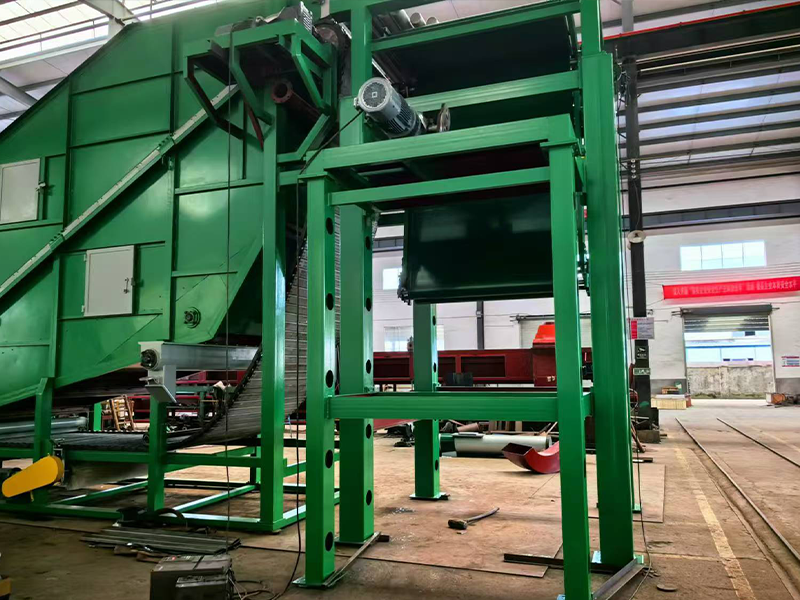
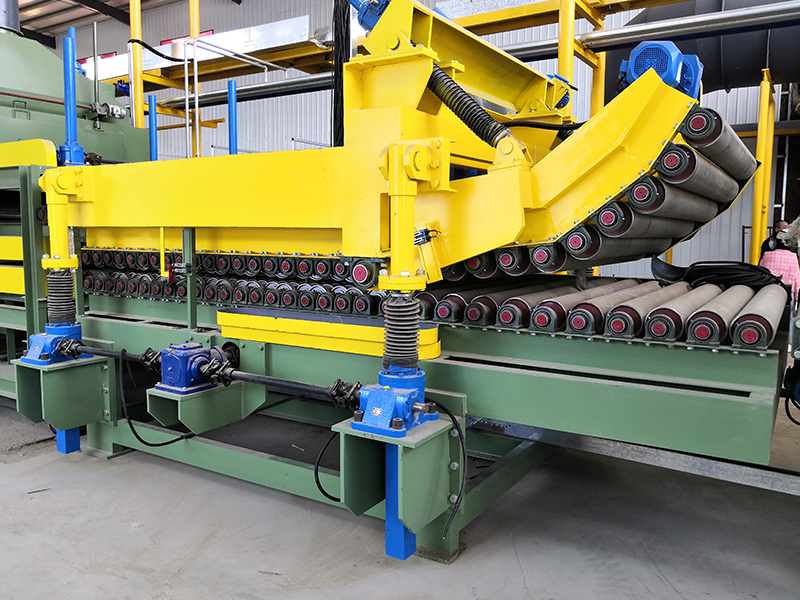
Folding and Pressing Machine
The adhesive cotton enters the shaping and pressing machine through the conveyor, and after compression and shaping, the density of the adhesive cotton transported can reach 250Kg/M3. It is then input into the board line heat curing furnace for production curing, thereby reducing the operating load of the chain and mesh board, reducing friction, and improving the service life of the mesh board and chain.
After multiple improvements and enhancements, if the output is less than 3 tons/hour, two-stage pleating (three motors) will be used, and if it is higher than 3 tons/hour, three-stage pleating (four motors) will be used. Adopting an integrated transmission system, reducing motor and transmission usage by 50%, and decreasing electricity consumption and the possibility of malfunctions by 50%.
Thermal Polymerization Furnace
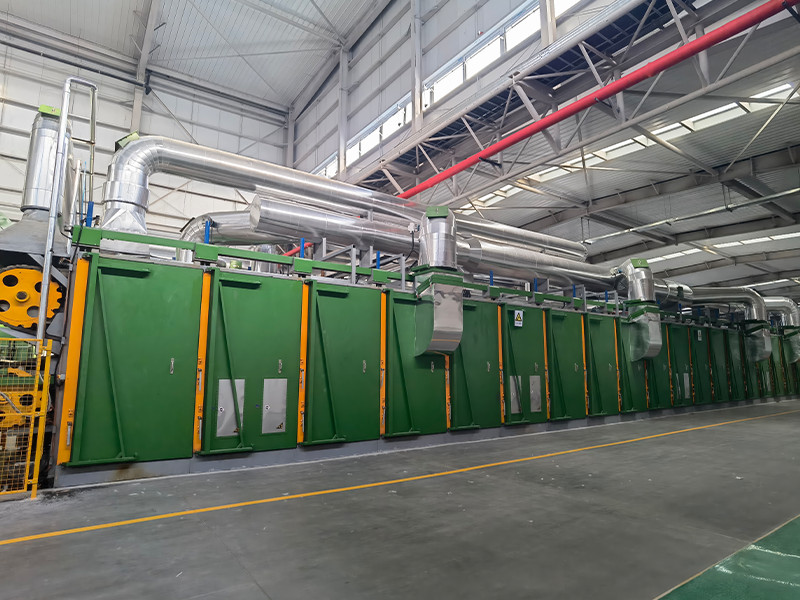
The chain plates of the thermal polymerization furnace are driven by separate upper and lower single machines, and are controlled synchronously by a frequency conversion PLC. The synchronization rate is 100% (adjustable at will). It is driven in combination with a dual-motor configuration, a planetary reducer, and a cross coupling.
The curing process is divided into four stages. Thanks to the unique design of the hot air box and the air isolation system, the hot air is forced to penetrate for curing. The hot air is controlled by an automatic circulation system, and the utilization rate of the waste heat circulating air reaches 75%.
Cutting Section
Longitudinal Cutting Machine: For a 2 – plate production line, it adopts the configuration of 1 in – use and 2 standby machines; for a 3 – plate production line, it is 2 in – use and 3 standby machines. Toothless and dust – free circular knives are used, and toothed alloy cutting saw blades are for standby.
The servo-synchronous cutting machine is a mature product. Recently, the main improvement is to replace the friction-plate clutch with a toothed clutch to reduce tolerance. The cutting length can be set arbitrarily, and the error is within an acceptable range.
Automatic Heat Shrink Packaging Machine
The finished product conveying section is divided into two sections, which are separately controlled and operated automatically. They are conveyed to the sealing machine, automatically sealed, and output after entering the heat shrinkage chamber. The cooling section of the contraction conveyor accounts for three fifths of the total length and is equipped with two cooling fans.
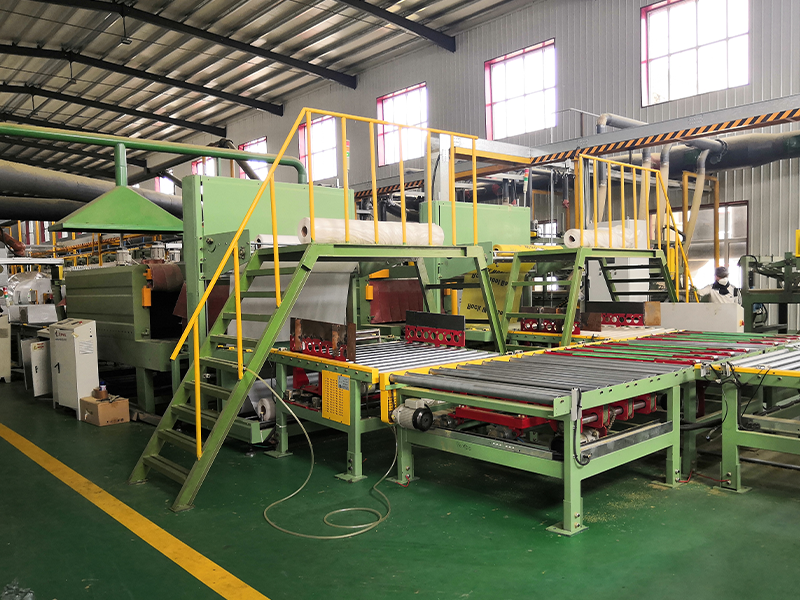
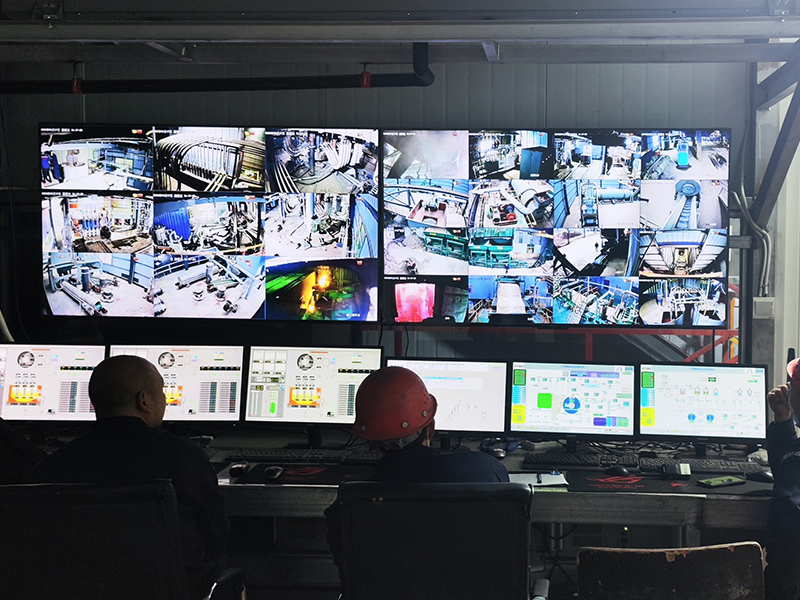
Automated Production Line Electrical Control System
(1) Melting equipment, dust removal and desulfurization system, centrifuge.
Variable frequency drive starting device, digital temperature meter, automatic water level height controller.
(2) The cotton production and conveying section is controlled by the central control room of the pendulum cotton laying machine.
Screen display synchronous control touch screen, PLC programming control, frequency converter starting device.
Environmental Protection Equipment for Rock Wool Production Line
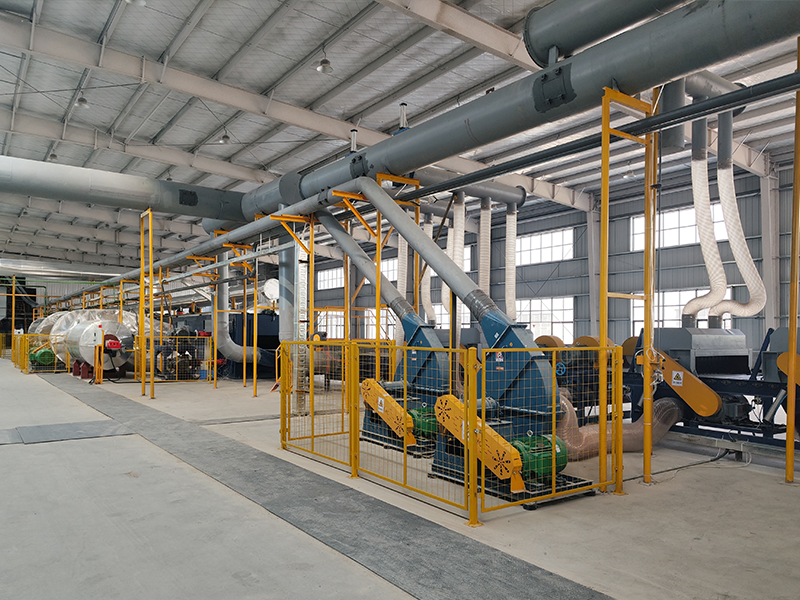
Including bag filters, wet electrostatic precipitators, and centrifugal fans, this system is designed to control dust, purify exhaust gas, and improve the air quality of the production line. As rock wool is also widely known as stone wool, this type of equipment is often considered an essential supporting system in both rock wool and stone wool production lines.
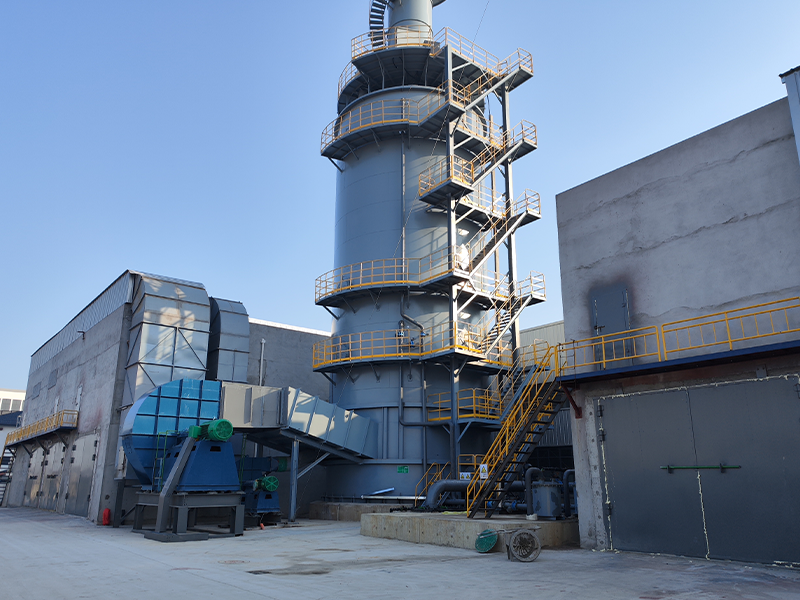
Wet Electrostatic Precipitator
The dust removal process of a wet electrostatic precipitator can be divided into four stages: ionization of gas; Dust gains ions and becomes charged; Charged dust moves towards the electrode; Remove the dust from the electrode.
The target of wet electrostatic precipitator removal is dust and mist droplets, but due to the differences in physical properties between mist droplets and dust, their working principles also vary. Due to the presence of water droplets, the resistance of water is relatively small.
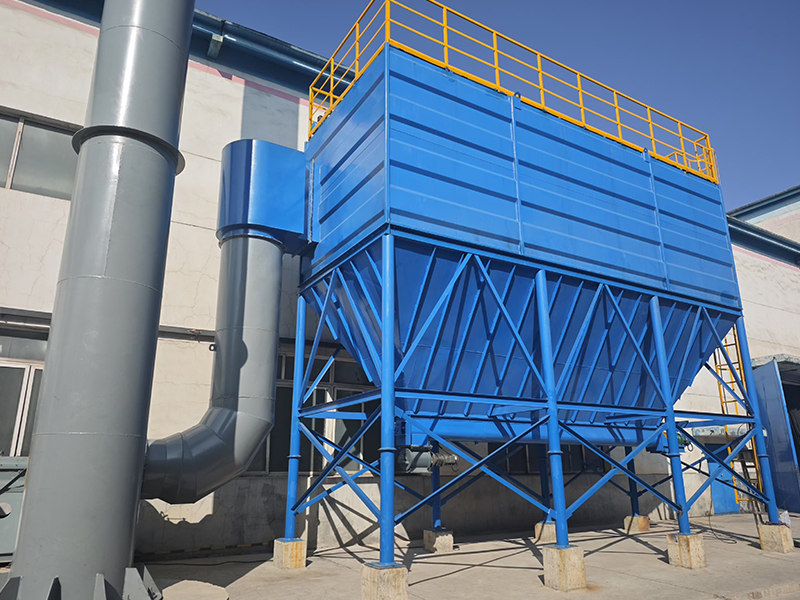
Bag Filter
Bag filter is a dust removal equipment that uses filter media to make bag or cylindrical filter elements to capture dust in dusty gases. The dust removal performance of bag filter is not affected by the dust concentration and gas volume of the dust source. The dust particles of the captured object exceed 0.2 microns, and the capture efficiency can generally reach 99%. For particles above 1 micron, the capture efficiency is almost 100%.
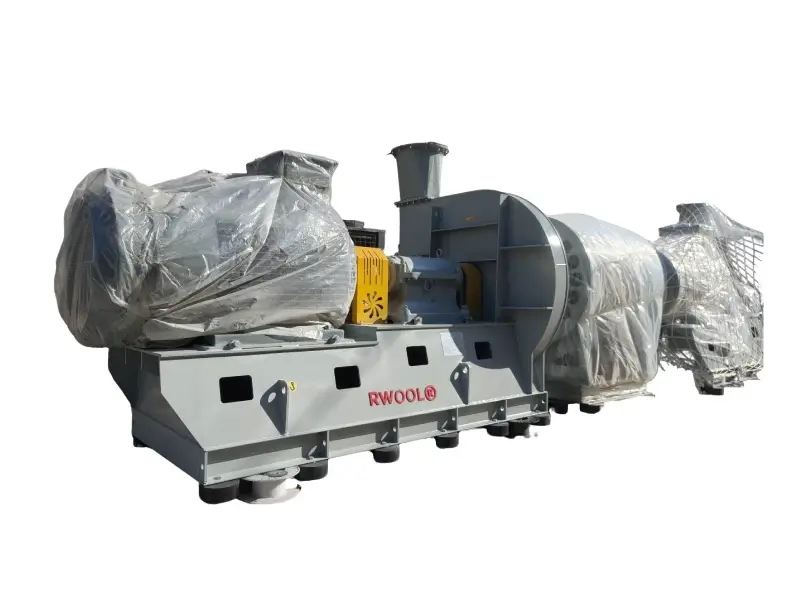
Centrifugal Fan
The RWOOL10-1A high-pressure centrifugal fan is primarily designed for conveying high-pressure gases, including air and other non-flammable, non-explosive, non-volatile gases that are harmless to humans and non-corrosive to steel. The conveyed gas must not contain viscous substances, with dust and hard particulate matter not exceeding 150 mg/m³. Gas temperature must not exceed 80°C.
Rock Wool Manufacturing Process
The production of rock wool mainly uses natural minerals such as basalt and dolomite as raw materials.
These minerals are carefully selected and crushed before being fed into high-temperature furnaces.
The minerals in the rocks are fully melted to form liquid magma.
Subsequently, this liquid magma is fed into high-speed centrifugal equipment.
Through high-speed rotation and spraying, the magma is fibred, forming fine rock wool fibres.
OUR ADVANTAGES

State-owned Enterprise
Xiangtan Hongqiang Machinery Manufacturing Co., Ltd. is a state-owned enterprise specializing in the production of rock wool machinery and rock wool products.

High Quality
It was founded in the 1980s. In 1987, the automatic production line of rock wool board with an annual output of 5,000 tons was the first in the five central and southern provinces. In 1992, the quality of our rock wool board exceeded the first-class standard of GB11835-89.

Large Factory Area
Our factory covers an area of 30,000 square meters. More than ten automated rock wool production lines can be manufactured throughout the year, with annual production capacities of 8,000 tons, 10,000 tons, 15,000 tons and 25,000 tons.

Full Service
Company actively adjusts its business strategy , continuously develops and improves the technological content of its products, and provides a full set of services for the automatic production line of rock wool machinery, from site selection, terrain layout, building construction, equipment installation, commissionin.