
When people talk about Mineral Wool Production Lines, the attention usually goes straight to output numbers or final product specs. That makes sense, but it misses the part that often decides whether the line runs smoothly or becomes a constant troubleshooting exercise: the equipment itself. In mineral wool manufacturing, every major machine has a job that affects the next one. If one section is out of balance, the whole system tends to show it.
That is why equipment selection is less about buying individual machines and more about building a production flow that can hold together under heat, dust, vibration, and long operating hours. The details matter here, sometimes more than expected.
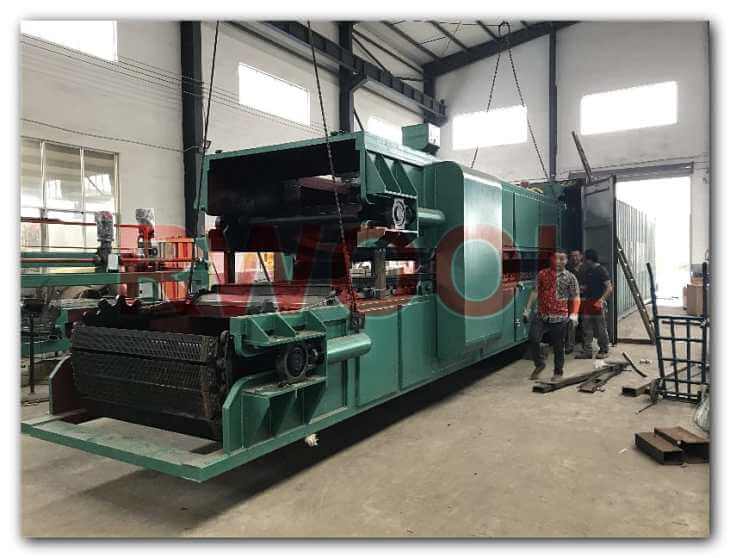
Why equipment selection matters in mineral wool production
A mineral wool line is a chain, and the chain is only as steady as its weakest section. A furnace that wastes energy, a fiberizing unit that produces inconsistent strands, or a forming system that cannot keep density uniform can all lead to scrap, rework, and downtime.
The equipment also shapes operating cost in a very direct way. Power use, maintenance intervals, spare parts, and cleaning requirements all add up. In many factories, the real difference between a line that performs well and one that feels difficult is not just technology level, but how well the machines match each other.
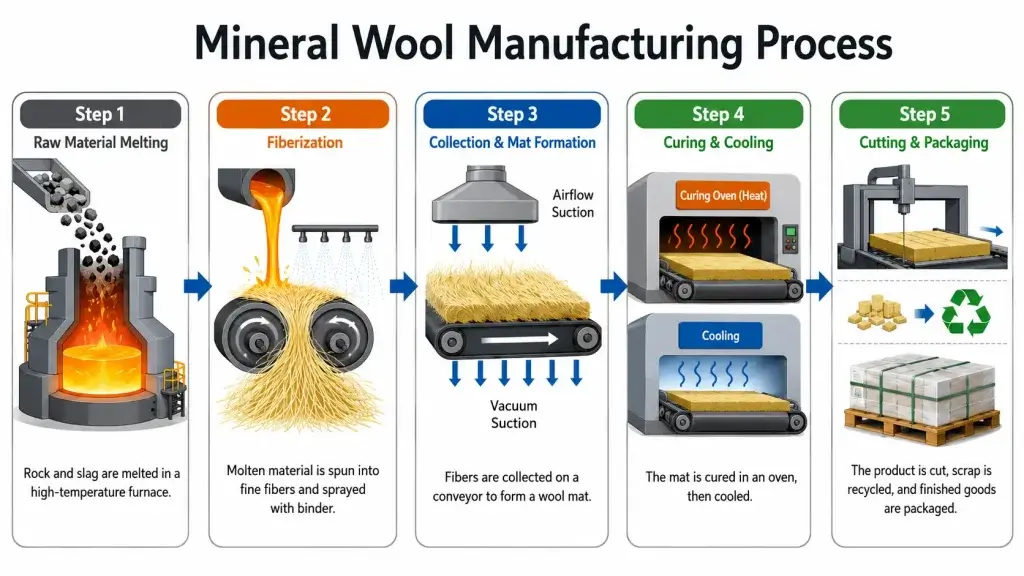
Main equipment used in mineral wool production lines
Melting furnace
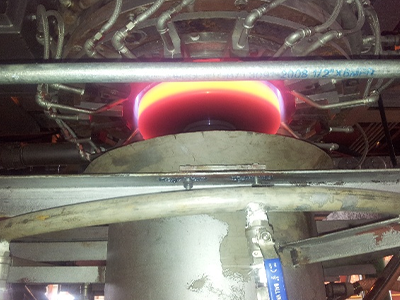
The melting furnace is where the raw materials become a workable melt. This is one of the most energy-intensive parts of the system, so efficiency matters a lot. A furnace that holds temperature steadily and recovers heat well usually pays off over time, even if the purchase cost is higher.
What to watch for:
- thermal efficiency
- temperature stability
- refractory durability
- fuel flexibility
- ease of maintenance
A furnace that runs erratically tends to create variation downstream, and that variation is rarely easy to fix later.

Fiberizing or spinning unit
Once the melt is ready, the fiberizing unit turns it into fibers. This stage strongly affects fiber fineness, length distribution, and shot content. If the spinning system is not performing well, product quality usually drops quickly.
Operators often notice issues such as:
- uneven fiber diameter
- excess non-fibrous material
- unstable output at higher speeds
- accelerated wear on rotating parts
This is one of those sections where mechanical precision really shows up in the product.
Forming chamber
The forming chamber collects fibers and helps shape the initial blanket. It may not look dramatic, but its influence is serious. Poor airflow control or bad sealing can create density variation, dust leakage, and binder distribution problems.
For those comparing systems inside Mineral Wool Production Lines, the forming chamber is usually worth a closer look than people expect. It affects how stable the blanket is before curing, and that stability carries through to the final product.
Binder spraying system
The binder system holds the blanket together after forming. If spray coverage is uneven, the cured product may feel weak in some areas and overly stiff in others. Clogging can be a recurring issue, especially when the system is not easy to clean.
Common concerns include:
- nozzle blockage
- inconsistent atomization
- overspray
- poor binder recovery
- difficult cleaning access
A binder system that is easy to maintain usually saves more time than it seems like it should.
Curing oven
The curing oven sets the binder and gives the blanket its final structural strength. Temperature uniformity is especially important here. If the oven heats unevenly, product performance can vary across the width or thickness of the board or blanket.
The oven should be evaluated for:
- heat distribution
- airflow design
- energy consumption
- insulation quality
- throughput compatibility
A curing oven that works well often makes the rest of the line feel more predictable.

Cutting and packaging equipment
This section is sometimes treated as an afterthought, but it affects labor efficiency and product presentation. Clean cuts, accurate sizing, and reliable wrapping help reduce damage and waste.
In many plants, packaging bottlenecks appear only after everything else has improved, which is a little frustrating but not unusual.

Supporting systems that are easy to overlook
Some of the most important parts of the line are not the ones that get the most attention during purchasing.
- Dust collection systems: important for cleanliness, safety, and material recovery.
- Exhaust and filtration units: help control emissions and support stable airflow.
- Conveyors and handling systems: keep the process moving without unnecessary manual intervention.
- Control systems: monitor temperature, speed, pressure, and consistency across the line.
These support systems may seem secondary, but they often decide how easy the plant is to run on a daily basis.
Equipment comparison table
| Equipment | Main role | Key performance concern | Common issue if poorly designed |
|---|---|---|---|
| Melting furnace | Converts raw material into melt | Energy efficiency and temperature stability | High fuel use, unstable melt quality |
| Fiberizing unit | Turns melt into fibers | Fiber uniformity and wear resistance | Inconsistent fiber, frequent maintenance |
| Forming chamber | Shapes the blanket | Airflow control and sealing | Uneven density, dust leakage |
| Binder spraying system | Bonds fibers together | Spray coverage and clog resistance | Weak spots, overspray, blockage |
| Curing oven | Sets final structure | Heat distribution and throughput | Uneven curing, product defects |
| Cutting/packaging | Sizes and packs product | Accuracy and speed | Scrap, slow packing, damage |
Common problems operators face
A lot of production pain points show up repeatedly across plants, and they are usually practical rather than dramatic.
- Energy loss: especially around the furnace and curing section.
- Clogging: often in binder nozzles or filtration components.
- Uneven density: usually linked to forming or airflow problems.
- Wear and tear: common in high-temperature or high-abrasion zones.
- Downtime: often caused by maintenance access that was not designed well in the first place.
In conversations around the manufacturing process of mineral wool, these issues tend to come up again and again because they affect the line in a very direct way. They are not abstract engineering concerns; they are the things that interrupt production.
How to choose equipment for your line
Equipment selection works best when it starts with the production goal, not the catalog page.
Key factors to weigh
- Product type — board, blanket, or other insulation formats.
- Output capacity — current demand plus some room for growth.
- Maintenance access — can workers reach the wear points easily?
- Automation level — is the plant aiming for more manual control or more digital monitoring?
- Environmental compliance — emissions, dust, and energy standards matter more every year.
There is no single perfect setup for every factory. A line built for high output will not always be the best choice for a plant that values flexibility or simpler upkeep.
Conclusion
The best Mineral Wool Production Lines are usually the ones where each machine supports the next without creating hidden friction. That sounds obvious, but in practice it is easy to overlook. A strong furnace, a stable fiberizing unit, a well-designed forming chamber, and a reliable curing section all matter — yet the real value comes from how they work together.
So when choosing equipment, it helps to think less in terms of individual purchases and more in terms of process balance. That approach usually leads to fewer surprises, smoother operation, and a line that is easier to live with over the long run.
FAQ
Which equipment usually becomes the main bottleneck in a mineral wool line?
It often depends on the plant, but the furnace and fiberizing section are common pressure points because they influence both throughput and quality.
How does automation improve line performance?
Automation helps keep temperatures, airflow, and process speed more consistent, which reduces variation and makes troubleshooting easier.
What should buyers check besides the machine price?
Maintenance access, spare parts support, energy consumption, and compatibility with the rest of the line are usually just as important as the initial cost.




