
Choosing a Forming Chamber for glass wool production is not usually the part of the project that gets the most attention at first. The spinning section or curing oven tends to sound more impressive. But in practice, the chamber is where the process becomes visible in the product. If the chamber performs well, the mat forms evenly, dust stays under control, and the line feels easier to manage. If it performs poorly, the problems tend to spread everywhere else.
That is why chamber selection deserves a more careful look than it often gets. It is not just about buying a box-shaped section of equipment. It is about deciding how the line will handle fiber collection, airflow, binder spray, cleaning, wear, and consistency over time.

Why this choice matters more than it first appears
The forming chamber sits at a very sensitive point in a Glass wool production line. By the time fibers enter this section, they are already light, fragile in movement, and highly influenced by air patterns. The chamber has to capture them quickly and lay them down in a controlled way.
That sounds simple, but the results can be surprisingly sensitive. Small design differences can affect:
- mat thickness
- bulk density
- shot retention
- dust loss
- binder distribution
- downstream curing stability
In other words, the chamber is not just part of the line; it shapes the character of the final product.
Start with the role of the chamber in the line
Fiber collection and mat formation
The first job of the chamber is to collect fibers coming from the forming or spinning section and guide them onto the moving belt. A good chamber does this without creating thick clumps or empty channels in the mat.
When the fiber layer lands evenly, the final insulation product usually behaves more predictably. That matters for thermal performance, compression recovery, and general handling.
Airflow, suction, and binder coordination
Airflow is one of the most important design factors, even though it is not always visible during a factory visit. The chamber must balance suction strength and air distribution so the fibers settle correctly. If the suction is too weak, fibers escape or build up unevenly. If it is too aggressive, the mat can become distorted or overly compacted.
Binder coordination is equally important. The chamber should allow spray to reach the fiber stream in a uniform way, not just one side or one band of the mat.
Why stability matters at high speed
A lot of glass wool lines are expected to run faster than older setups, and that is where chamber stability becomes even more important. At higher output, there is less room for adjustment. A chamber that works “well enough” at slow speed may become a problem once production ramps up.
Main factors to evaluate before buying
The best choice usually comes from looking at the whole system, not one feature in isolation. A simple comparison can help clarify what matters.
| Selection factor | Why it matters | What to watch for |
|---|---|---|
| Chamber geometry | Affects fiber flow and mat spread | Dead zones, turbulence, poor width coverage |
| Suction performance | Controls deposition and density | Uneven pull, weak capture, pressure loss |
| Sealing quality | Reduces dust leakage and energy waste | Air leaks, dust escape, unstable vacuum |
| Wear resistance | Extends service life in harsh conditions | Thin liners, fast abrasion, frequent repairs |
| Belt integration | Helps the mat move smoothly downstream | Tracking issues, transfer misalignment |
| Maintenance access | Reduces downtime and labor burden | Hard-to-reach zones, awkward cleaning points |
| Automation support | Improves consistency and monitoring | Limited sensor integration, manual-heavy operation |
The table may look basic, but these are usually the exact places where real-world performance is won or lost.
Common mistakes buyers make
A few patterns show up again and again when chambers are selected too quickly.
Focusing only on price
A lower upfront cost can look attractive, but a cheaper chamber may create higher operating costs through more downtime, more waste, or more cleaning work.
Ignoring maintenance access
This is a big one. If key components cannot be reached easily, routine maintenance becomes slower and less consistent. Over time, that can turn into a recurring production headache.
Underestimating dust and sealing issues
Dust control is not just a housekeeping issue. It affects material efficiency, cleanliness, and even process stability. Poor sealing often shows up as a small problem first, then becomes a larger one.
Choosing a chamber that does not match the production target
A chamber designed for a different output range or product density may never feel fully “right,” even if it technically runs.
What to ask suppliers or engineers
Before making a decision, it helps to ask a few practical questions rather than relying on general descriptions.
- What production range is the chamber designed for?
- How is airflow balanced across the full width?
- What materials are used in the wear zones?
- How is cleaning handled in daily operation?
- Can the chamber support future automation upgrades?
- What spare parts are typically required?
- How long is the expected lead time for replacement components?
These questions often reveal more than brochures do.
How chamber design influences product consistency
A well-chosen chamber helps the entire line produce a more uniform blanket. That affects product quality in several ways.
- Density consistency: even density usually means more predictable insulation behavior.
- Thermal performance: stable mat structure supports stable thermal resistance.
- Fiber distribution: better spread reduces weak spots.
- Waste reduction: fewer defects mean fewer rejected rolls or panels.
There is also a practical benefit that is easy to underestimate: a stable chamber makes the line easier to run. Operators spend less time compensating for random variation.
Choosing based on your production goals
Different factories value different things. That changes the right chamber choice.
- For high output: prioritize airflow stability, wear resistance, and automation support.
- For flexible product ranges: look for a chamber that can handle different densities and widths without major rework.
- For lower operating cost: focus on sealing, maintenance simplicity, and energy efficiency.
For easier maintenance: choose modular access points and a design that allows quicker inspection.
Sometimes the best option is not the most advanced one. It is the one that matches the line’s daily reality.
Related equipment in the wider line
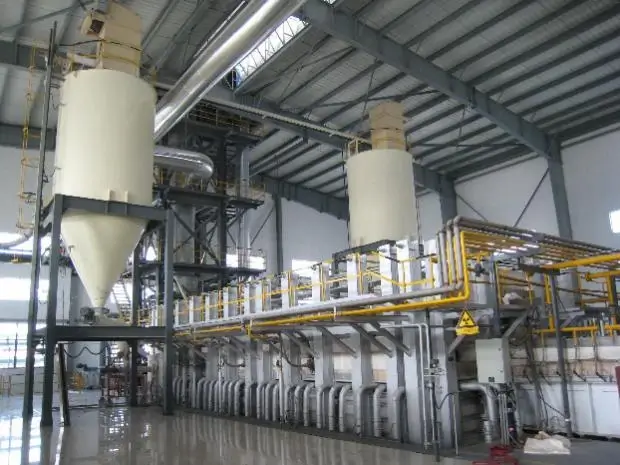
It helps to view the chamber in context, not as a standalone purchase. In a complete Glass wool production line, the forming chamber has to work in sync with the fiberizing system, suction section, binder spraying setup, conveyor, and curing equipment.
For buyers comparing configurations, a dedicated Forming Chamber for glass wool production? page can be useful for understanding system layout and technical fit before narrowing down options.
Conclusion
Choosing a Forming Chamber for glass wool production is really about choosing stability. The right chamber supports cleaner fiber deposition, better mat uniformity, less waste, and fewer production interruptions. The wrong one tends to make every small process variation feel bigger than it should.
In the end, the best decision is usually the one that fits the line’s output goals, maintenance expectations, and long-term operating priorities — not just the purchase budget.
If you want to know more about Forming Chamber for glass wool production, please read What is a Forming Chamber for glass wool production?
FAQ
Does a larger chamber always improve performance?
Not necessarily. Size alone does not guarantee better results. A chamber has to match airflow, line speed, and mat width to be effective.
How does chamber design affect maintenance planning?
Design influences how often cleaning is needed, how easy parts are to reach, and how much time shutdowns take. Better access usually means smoother maintenance cycles.
What signs suggest the current chamber may be underspecified?
Frequent dust escape, unstable mat thickness, repeated airflow adjustments, and higher-than-expected wear are common warning signs.




