
A Forming Chamber for glass wool production is one of those sections that can look simple from the outside but ends up influencing almost everything that matters in the finished product. In a glass wool line, it sits right where molten glass has already been turned into fibers, and the next task is to collect those fibers evenly, shape them into a stable mat, and prepare them for the later curing stage. That step sounds straightforward. In practice, it is where airflow, suction, binder spray, and fiber distribution all have to cooperate without much room for error.
When the forming chamber is well designed, the line tends to run more smoothly, the insulation blanket looks more uniform, and the product behaves more predictably in use. When it is not, small issues have a habit of showing up everywhere: uneven density, dust loss, weak edges, or a mat that does not cure as consistently as expected.
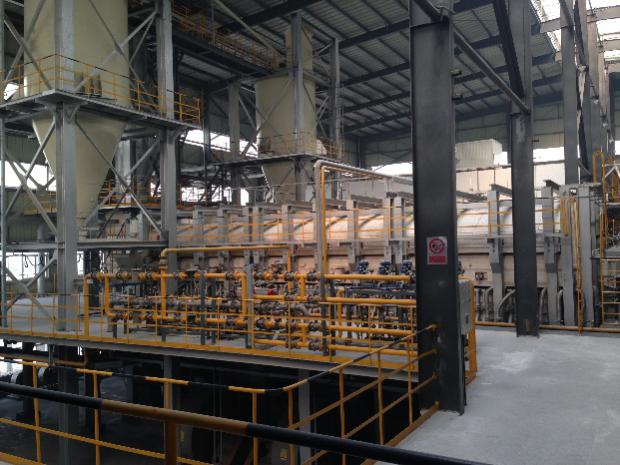
Why the forming chamber matters in the glass wool line
The forming chamber is not just a container for loose fibers. It is the transition point between fiberization and final product formation. That transition is critical because the fibers are still light, airborne, and highly sensitive to the surrounding air pattern.
In a typical Glass wool production line, molten glass is fiberized at high speed, then the fibers are carried by airflow into the chamber. From there, suction systems and moving conveyors help lay the fibers down into a mat. The chamber has to manage several things at once:
- capture fibers efficiently
- distribute them evenly across the belt
- support binder application
- reduce waste and airborne dust
- maintain a stable thickness profil
If any one of those becomes unstable, the downstream quality usually reflects it.
How the forming chamber works
From molten glass to collected fibers
The chamber receives fibers that have already been stretched and cooled from the spinning or fiberizing section. These fibers are extremely fine and fragile in a process sense, so the chamber must collect them quickly before they scatter or clump.
At this point, the basic goal is simple: turn a cloud of loose fibers into a controlled blanket. The difficulty lies in doing that continuously, at production speed, without creating thick spots or empty zones.
Airflow, suction, and deposition control
Air movement is doing most of the invisible work here. The chamber uses controlled airflow and suction to guide fibers onto the forming belt. This is where experience and design details start to matter more than theory.
A stable airflow pattern helps:
- spread fibers across the full width
- prevent local buildup
- keep shot and dust from becoming concentrated in one area
- support a more even density profile
Even small imbalances can create visible differences in the mat. Some operators describe it as the line “breathing badly” when suction is off or air leakage changes the deposition pattern. That may sound informal, but it is a fairly accurate way to think about it.
Binder spraying and mat shaping
Binder is usually applied during or near this stage, depending on the line design. The chamber therefore has to work not only as a collection zone but also as a shaping environment for the final blanket structure.
A good chamber setup helps binder reach the fiber layer more uniformly. That matters because poor binder distribution can lead to weak bonding, irregular curing, and a finished product that performs inconsistently in thermal or acoustic applications.
Main components and their functions
Below is a practical overview of the parts commonly associated with a forming chamber and what they do.
| Component | Main function | Common issue if poorly designed |
|---|---|---|
| Chamber body | Houses the forming zone and guides airflow | Leakage, turbulence, dust escape |
| Suction box / vacuum section | Pulls fibers toward the belt evenly | Uneven mat thickness |
| Forming belt / conveyor zone | Carries the fiber mat forward | Tracking issues, wear, contamination |
| Binder spray system | Applies binder to the fiber stream | Uneven bonding, nozzle clogging |
| Seals and insulation panels | Maintain pressure and thermal stability | Energy loss, dust leakage |
| Wear plates / protective liners | Resist abrasion from fibers and dust | Faster maintenance, shutdowns |
These components may look ordinary on a drawing, but in day-to-day operation they determine how stable the process feels.
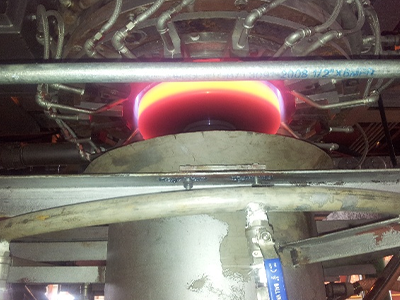
Common challenges operators notice
Some issues show up again and again in glass wool production. They are not always dramatic, but they add up.
Uneven thickness
This is probably the most visible problem. If fiber deposition is not balanced, the mat can end up too dense in one area and too thin in another.
Fiber loss and dust
Poor sealing or airflow control can allow usable fibers to escape. That is both a material loss and a housekeeping issue.
Wear and maintenance
The chamber works in a harsh environment. Fine abrasive particles, continuous airflow, and heat exposure all contribute to wear.
Energy efficiency
If the chamber leaks air or requires more suction than necessary, operating costs rise. This is one reason modern designs increasingly focus on better sealing and cleaner airflow paths.
Product consistency
A line can produce acceptable material for a while and still have hidden variation in density or structure. That inconsistency tends to matter later, especially for customers who need predictable insulation performance.
How to improve performance in a forming chamber
There is no single fix, but a few practical approaches tend to help.
- Balance airflow carefully
Stable pressure and suction patterns usually improve fiber distribution more than people expect. - Inspect spray nozzles regularly
Binder spray problems often appear as product quality problems first. - Use wear-resistant materials in high-contact zones
This can reduce shutdown frequency and maintenance surprises. - Monitor mat formation visually and with sensors
Modern sensors make it easier to detect variation before it becomes a scrap issue. - Keep seals and access points in good condition
Air leakage is one of those quiet problems that slowly affects performance.
Choosing the right forming chamber configuration
Not every production line needs the same setup. The right configuration usually depends on the product range and line goals.
Key factors include:
- line capacity
- target product density
- chamber width and geometry
- maintenance access
- binder system compatibility
- available floor space
- automation level
- budget for long-term operation
A larger or more advanced chamber is not automatically better. Sometimes a simpler configuration with stable control and easier upkeep performs more reliably over time.
For those comparing equipment options, it can help to review a dedicated Forming Chamber for glass wool production? page alongside broader line information such as a Glass wool production line. That makes the chamber easier to understand in context rather than as a standalone machine.

Conclusion
A Forming Chamber for glass wool production is more than a mid-process enclosure. It is the part of the line where fiber, air, suction, and binder start behaving like a product instead of a cloud of material. When the chamber is designed well and kept in good condition, the whole line tends to feel more predictable, and the resulting glass wool usually shows better consistency, lower waste, and more reliable insulation performance.
In a field where small process changes can create very visible effects, the forming chamber deserves more attention than it often gets.
FAQ
What Factors Most Affect Fiber Quality in the Spinning Chamber?
Air distribution, suction balance, and binder coordination usually have the strongest influence. Even a small change in one of these can show up across the finished mat.
How Often Should Spinning Chamber Components Be Inspected?
Inspection frequency depends on production intensity, but routine checks are typically needed for nozzles, seals, wear surfaces, and airflow stability. In busy lines, small daily checks can prevent larger interruptions later.
Does the Collection Chamber Affect Final Product Performance?
Yes. The chamber affects fiber layout, density consistency, and bonding quality, all of which influence thermal and acoustic performance in the final product.




