
Mineral wool is bulky, abrasive and sensitive to moisture. A pallet of uncompressed boards can occupy several times the space it needs, and any film that fails in transit can leave the insulation wet, dusty or deformed by the time it reaches a jobsite. Packaging decides freight cost, product presentation and the rate of damage claims.
A mineral wool packing machine is an end-of-line system that compresses, bags or wraps finished insulation products so they can be stored, transported and handled without losing performance. General-purpose packaging equipment may not be suitable, because mineral wool requires specific control of compression, product alignment, fiber contamination and film handling. This article compares the main systems, explains the selection criteria that matter most, and lists the specifications worth checking before you commit to a supplier.
The comparison begins with the material itself.
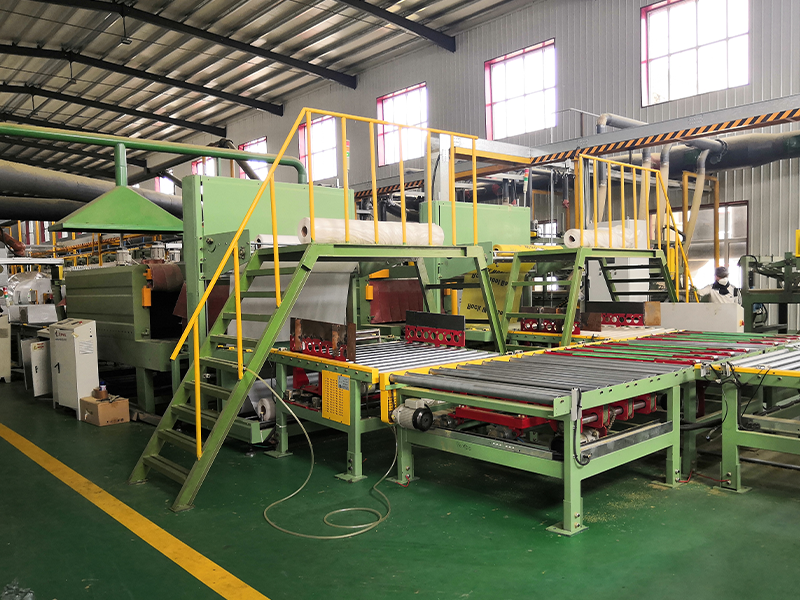
Why Mineral Wool Needs a Dedicated Packing Machine
Mineral wool does not behave like a solid product. It rebounds after compression, sheds fibers when handled, and needs protection from prolonged moisture exposure when packaging is damaged or incomplete. These behaviors decide the compression force, film type and sealing method a machine must support, which is why equipment built for rigid goods rarely performs well on an insulation packaging machine line.
Material Behaviors That Shape Machine Design
The most important property is compression recovery. Mineral wool is produced by melting rock or slag and spinning the melt into fibers, which gives it a springy structure that stores energy during compression and releases it once pressure is removed. A machine that releases a compressed stack too quickly lets the package expand before the film has locked the shape.
Bulk volume is the second factor, since uncompressed insulation consumes large amounts of floor space and container volume. The third is fiber shedding, which produces airborne dust wherever the material is cut, stacked or pushed. The fourth is moisture exposure, which can affect handling, storage and thermal performance depending on the product and exposure level.
Although air gaps and fitting methods matter during installation, packaging equipment has a different priority: maintaining board dimensions, controlling compression, and preventing moisture exposure before the insulation reaches the jobsite. Within a complete mineral wool production line, the packing stage enforces those priorities.
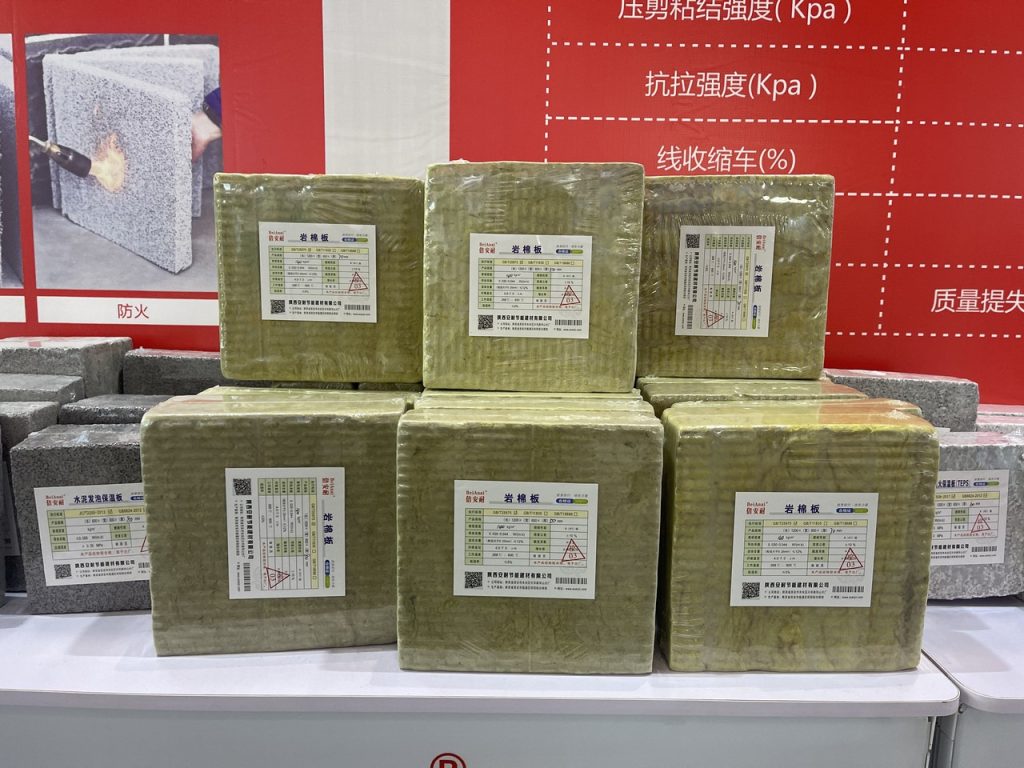
The Downside Factors You Must Design Around
Knowing the weaknesses of mineral wool explains most of the design decisions in a packing line: fibers settle on sensors and film guides, reducing accuracy; abrasive material wears down contact surfaces faster than paper or foam; large packages demand longer conveyors and wider film carriages; heavy compressed stacks must be squared and aligned by machine; and dust inside the film path causes sealing faults and shortens component life.
These factors explain why an ordinary packaging unit cannot simply be bolted onto the end of a line.
Core Mineral Wool Packing Systems Compared
The main systems are compression bagging, stretch hood wrapping, shrink wrapping, and roll wrapping or loose-fill bagging. There is no single best mineral wool packing machine; the right choice depends on whether you produce boards, slabs, batts, rolls or loose material, and on how much protection the final package needs.
Compression Bagging Systems
Compression bagging is the workhorse format for boards, slabs and batts. The machine receives a counted stack from the upstream conveyor, squares the layers, applies hydraulic or servo compression to a preset thickness, then pushes it into a PE bag or wraps it with PE film. The result is a compact pack that reduces container volume and protects the edges.
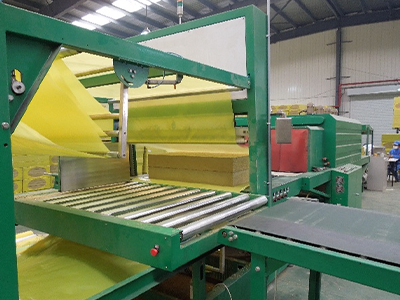
Stretch Hood and Shrink Wrapping Systems
These two systems are often confused, but they differ in almost every respect.
Shrink wrapping places a loose sleeve or bag over the product and passes it through a heat tunnel. The film contracts around the contours of the stack, producing a tight, tamper-evident package with a clean appearance that suits retail and export presentation. The trade-off is energy consumption.
Stretch hood wrapping requires no heat tunnel. A tubular film is stretched and pulled over the product, then released so the film grips the load. Some systems weld the film at both ends to form a fully enclosed, six-sided package that resists rain, dust and handling abrasion. This format suits large bundles and pallet loads. Because it does not require a heat-shrink tunnel, stretch hood packaging can reduce heat-related energy consumption and simplify the thermal section of the packaging line. For high board volumes, a dedicated Automatic Heat Shrink Packaging Machine remains common when appearance and seal strength take priority over energy cost.
Roll Wrapping and Loose-Fill Bagging Systems
Rolls of flexible insulation follow a different logic. They are usually wound and compressed to a target diameter, then wrapped with plastic film or paper in a continuous spiral or full-enclosure process. Feeding, positioning and tension control differ completely from board handling, so roll wrapping is a separate machine category.
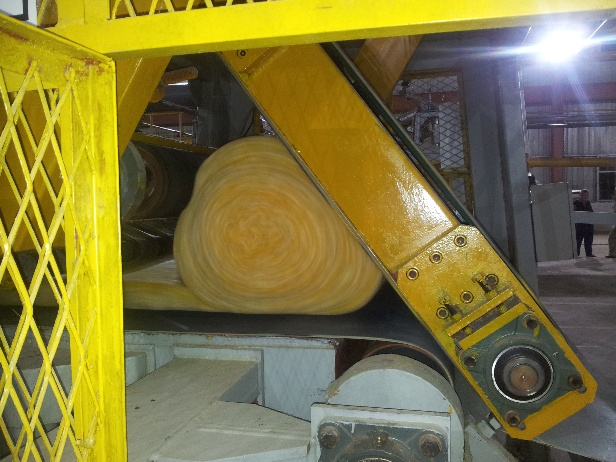
Loose mineral wool, by contrast, is a bulk material handled with conventional filling and weighing equipment.
The table below summarises how the main formats compare.
| Packing System | Best For | Compression | Moisture Protection | Energy Use | Typical Application |
| Compression Bagging | Boards / batts | High | Good | Low-Medium | Compact transport packs |
| Shrink Wrapping | Boards / bundles | Medium-High | Very Good | High | Finished retail and export packs |
| Stretch Hood | Large bundles / pallets | Low-Medium | Excellent | Low | Weather-resistant packaging |
| Roll Wrapping | Mineral wool rolls | Adjustable | Good | Medium | Flexible insulation rolls |
The practical conclusion is simple: there is no universally superior packing machine, only the system that best matches your product format, density, output and transport requirements.
Key Selection Criteria for Your Production Line
Four criteria decide most purchasing outcomes: product format and density, output capacity, sealing method, and film and energy cost. A machine that looks impressive on a specification sheet can still become the bottleneck of a line if any one of these is mismatched. Understanding how it fits alongside the rest of the mineral wool production line equipment makes the trade-offs easier to judge.
Product Format and Density Match
This is the first and most decisive filter. Boards, slabs, batts, rolls and loose fill each require different feeding, compressing and positioning mechanisms. Density matters just as much as shape: a system tuned for lightweight glass wool batts will deform high-density stone wool boards rather than compress them cleanly. Confirm the machine has been tested on your actual dimensions and density range.
Output Capacity and Line Speed
Do not simply ask for the fastest machine available. Machine capacity should match the upstream cutting, stacking or rolling speed, because an undersized packer creates a growing buffer of unfinished product, while an oversized one wastes capital and floor space. The real question is whether packing will become the bottleneck after every other section, including the Cutting Section, has been optimised.
Sealing Method and Moisture Protection
Sealing determines how much protection the package delivers. Open-ended wrapping suits short domestic transports, while fully enclosed packaging with welded ends is preferable for outdoor storage, humid climates and long sea freight.
Film Consumption and Energy Cost
Total operating cost is usually more revealing than purchase price. Compare film consumption per pack, heat tunnel energy demand, compressed air consumption, electrical load and maintenance intervals. Heat-free wrapping can eliminate shrink-tunnel energy demand, while actual film consumption should be calculated for each pack size and wrapping method.
Technical Specifications Worth Checking Before Purchase
Before signing, verify the specification range rather than the headline number. A quotation is only meaningful when the minimum and maximum values, the control architecture and the integration requirements are stated explicitly.
| Specification | What to Check |
| Product dimensions | Min and max length, width and height accepted |
| Packing speed | Packs or bundles per minute at rated conditions |
| Compression range | Adjustable range for different densities and thicknesses |
| Film type | PE, tubular film or shrink film compatibility |
| Film thickness | Supported micron range |
| Sealing system | Heat seal, shrink or stretch enclosure |
| Installed power | Total electrical load and supply requirements |
| Air requirement | Operating pressure and consumption |
| Control system | PLC, HMI and recipe storage capability |
| Line height | Compatibility with existing conveyors and transfer points |
Range is the operative word. A machine rated for a single product size may require mechanical changes whenever the format changes, which directly affects changeover time and labour cost.
Upstream and Downstream Integration
Packing equipment rarely operates alone. It sits inside a sequence of cutting, stacking, packing, palletising and wrapping, and any mismatch at a transfer point creates manual intervention. Integration questions should therefore cover conveyor heights, transfer speeds, buffering capacity and the handover logic between sections. Stacking devices and palletising units should be reviewed together with the packer.

Dust Management and Machine Durability
Because mineral wool is both dusty and abrasive, durability is a selection criterion rather than a maintenance afterthought. Look for sealed components in the film path, an easy-clean design, an interface for dust extraction, wear-resistant contact surfaces, and protected sensors that will not drift as dust accumulates. Where equipment is exported, guarding should also be checked against the relevant machinery safety requirements.
Evaluating Suppliers and After-Sales Support
Supplier evaluation should be evidence-based. The single most useful request you can make is to have your own mineral wool samples tested on the proposed machine, under production conditions, before the order is placed.
A structured evaluation should confirm whether the supplier can run a trial with your material, whether the system handles your full range of sizes and densities, documented changeover times, spare parts availability, remote diagnostics, installation and commissioning, operator training, PLC and recipe support, and warranty terms.
One precaution deserves emphasis: do not select a compression ratio based only on a catalogue number. The appropriate level depends on product type, density, thickness and the recovery behaviour your customers expect, and on roll products it is frequently adjustable by design. A supplier who cannot explain how the ratio was derived for your product is offering a number rather than a solution. It is also worth reviewing how the wider rock wool production line cost is structured, since packaging configuration often changes the final quotation.
Conclusion
Choosing a mineral wool packing machine is a matching exercise, not a search for the most powerful model. Start with product format and density, then match output to the upstream line, select a sealing method that reflects real storage and shipping conditions, and calculate film and energy cost alongside the purchase price. Confirm the full performance range in writing, and insist on a trial with your own material.
FAQ
Can mineral wool recover after compression?
Many low- and medium-density products can recover after controlled compression, but the allowable level depends on density, fiber structure, thickness and manufacturer requirements. Packing trials should therefore verify recovered thickness before a ratio is approved for production.
Does a packing machine work for both boards and rolls?
Some modular lines can handle multiple formats, but boards and rolls usually require different feeding, compression, positioning and wrapping mechanisms. A board packer works with flat stacks and vertical compression, while a roll wrapper handles cylindrical products and adjustable winding tension. Plan for two dedicated units or a modular system with documented changeover procedures.
What compression ratio should a mineral wool packing machine achieve?
There is no universal target. The correct ratio depends on density, thickness, recovery requirements and the final package format. Aggressive compression reduces freight volume but can permanently deform low-density products, while conservative compression leaves money on the truck. The final figure should be confirmed on your own product.




