
Mineral wool is chosen for facades, roofs, ducts and process plant because it is inorganic, non-combustible and dimensionally stable. Moisture tests all three claims at once: a torn tarpaulin on a delivery, an open rainscreen cavity, a burst pipe above a ceiling.
A single wetting event rarely destroys mineral wool. The fibres do not rot, dissolve or feed mould, and a board that dries returns to its fire class and most of its thermal resistance. Water displaces the air inside the open fibre network, and that air is the insulation. Permanent damage comes from duration, compression, contamination and corrosion of adjacent metal.
The order in which those effects appear separates a housekeeping problem from a replacement.
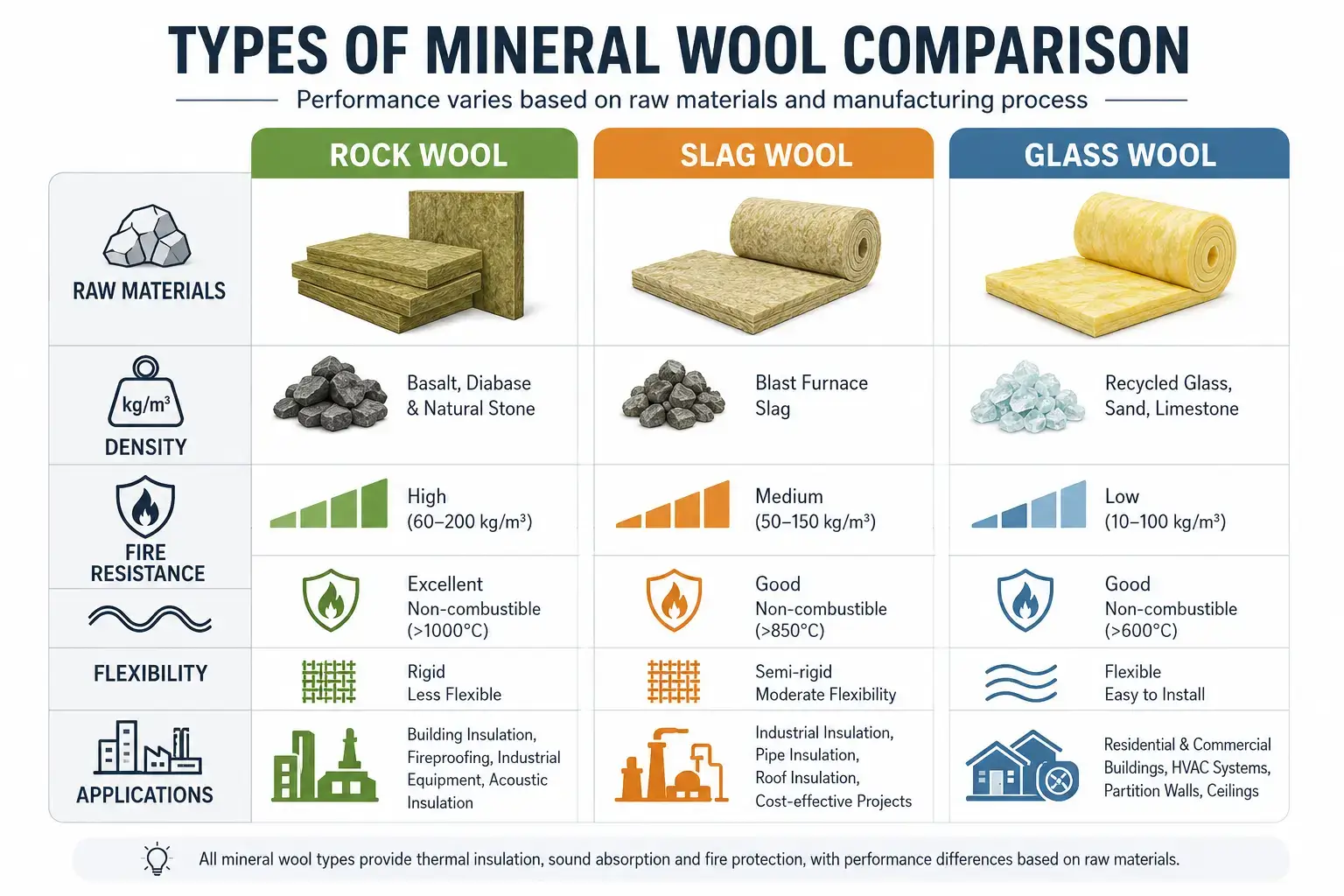
The Direct Answer: It Survives Water, but Not Waterlogging
Mineral wool can get wet and still perform, provided it can dry. A board rained on for a day and then ventilated returns close to its declared conductivity. A board standing in water for weeks keeps its shape but loses compressive strength, thickness recovery and part of its repellency, even when the surface feels dry.
Untreated wool, still common in dry interior cavities, is hydrophilic: water spreads along the filaments and wicks sideways. Treated wool carries a thin mineral oil or silane film, which makes water bead and run off. Mineral wool and rock wool are used interchangeably, but moisture behaviour is set by that treatment.
| Behaviour | Untreated wool | Hydrophobically treated wool |
| Water on the surface | Spreads and wets out | Beads and runs off |
| Uptake after 24 hours partial immersion | Several kg/m2 and rising | Below 1 kg/m2, the WS threshold of EN 13162 |
| Drying in ventilated air | Days to weeks | Hours to a few days |
What Happens Inside the Material
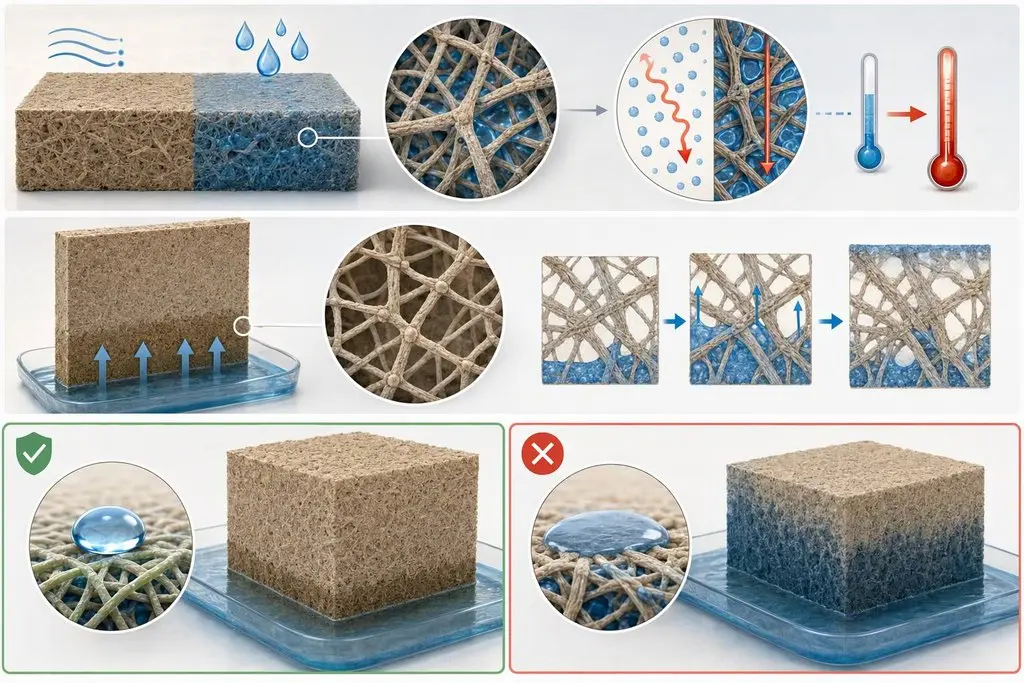
Water does not enter the fibres; it occupies the space between them. A board is more than 90 percent air by volume, and that air is the product. Once water fills part of it, heat finds a continuous path through a medium that conducts about twenty times better than air.
Water Replaces Air in the Fibre Network
The skeleton is a random mat of filaments a few micrometres across, bonded where they cross, with connected pores between them. Because those pores connect, water moves by capillary suction, which is why a damp top edge reappears at the base of the board.
The Water-Repellent Film Decides the Outcome
Hydrophobicity is a surface effect. The treatment changes the contact angle of a droplet from spreading to beading, so water needs external pressure rather than suction to enter. A treated board can sit in a puddle and wet only its outer millimetres.
How Much Thermal Performance Is Lost
The loss is large and immediate. At 10 percent moisture by volume a board has roughly a third less thermal resistance, and a saturated board insulates barely better than wet brick. A leak that leaves the insulation looking intact can double the heat loss through a wall.
Still air conducts about 0.026 W/(m·K), water about 0.6 and the fibre around 1. Conductivity typically rises from about 0.037 to 0.055 W/(m·K) at 10 percent moisture, and approaches 0.9 when saturated.
| Moisture by volume | Indicative conductivity, W/(m·K) | Change in R value, 100 mm board |
| Dry, as declared | 0.036 | Reference, R = 2.78 m2K/W |
| 10 percent | 0.055 | About 35 percent lower |
| 20 percent | 0.075 | About 52 percent lower |
Does Wet Mineral Wool Dry Out and Recover?
Usually yes, because the structure that admits water also releases vapour. A 100 mm board with one face open to moving air dries in a few days. Water trapped behind a vapour barrier may never dry, and that is the case that becomes a permanent defect.
What Recovers After Drying
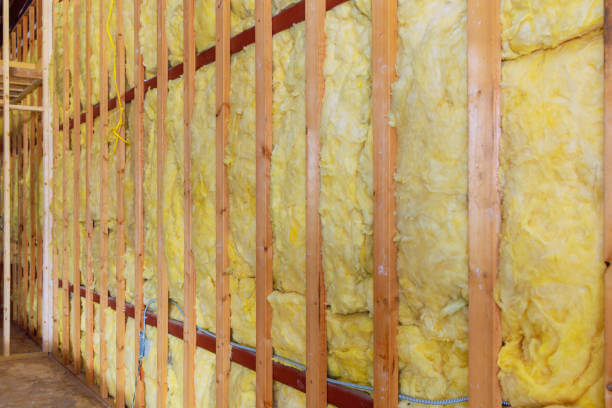
Thermal performance returns almost completely once the pores are air filled, because one wetting cycle leaves fibre and binder unchanged. The same physics governs when glass wool gets wet, since both share that open structure.
What Does Not Recover
Resin bonds at fibre crossings are hydrolysed by long water contact, softening the board. Wool compressed while saturated stays compressed. Salts remain in the pores and are hygroscopic, so the board re-wets itself from humid air. Aged basalt wool has shown compressive strength down by more than 90 percent after repeated wetting. Squeeze a corner: if it does not spring back, drying will not restore it.
The Secondary Damage That Outlasts the Insulation
The insulation is rarely the most expensive item in a wet assembly. Studs, fasteners, pipework and timber sit beside it, and all respond to prolonged wetness in ways that cost more than new wool.
Corrosion Under Insulation
Water held against metal in the presence of oxygen forms a corrosion cell that runs unseen. In industry this is corrosion under insulation, a known cause of wall loss on pipes and vessels. In buildings, zinc coated fixings rust through before the insulation shows trouble.
Mould, Odour and Indoor Air
Mineral wool gives mould nothing to eat, an advantage over cellulose. The binder is not inorganic, though, and settled dust adds a food source, so a cavity wet for weeks grows mould on the binder film. The first indoor sign is usually a musty smell.
Freeze-Thaw and Compression
Water expands as it freezes and can disrupt binder bonds, so a board that freezes and thaws repeatedly loses strength faster than one that stays damp. Saturated wool is also heavy enough to sag under its own weight.
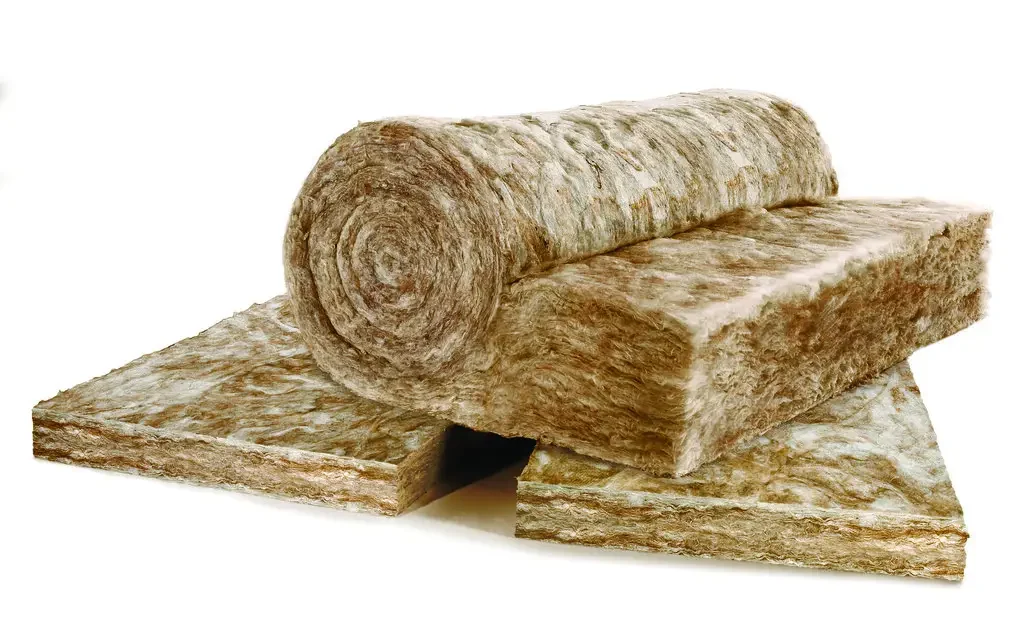
Is Mineral Wool Ruined Once It Gets Wet?
Not automatically, and the decision is mechanical. If the material springs back, carries no odour and no staining, drying in place is enough. If it stays flat, smells musty, or has met flood water or corroding metal, it is a replacement however dry it becomes.
| Condition | What you see | Action |
| Splash or brief leakage | Surface damp, core dry, springy | Ventilate, recheck after 72 hours |
| Saturated through, under 48 hours | Heavy, water runs when squeezed | Remove, dry, reinstate if thickness recovers |
| Standing water or flood contact | Slumped, no rebound, staining | Replace |
Why Is Damp Mineral Wool Heated?
Damp wool is heated for three different reasons. In a laboratory, heating measures moisture content. In a factory, it cures the binder and drives off the water that carried it. On site, heating is a drying method, and the least predictable of the three.
The laboratory method weighs a sample, dries it at 105 degrees Celsius plus or minus 2 until the mass stops falling, then weighs it again; the difference is water. Test methods such as IS 3144 for mineral wool follow the same routine.
In production, the mat leaves the forming chamber carrying water from the binder emulsion, and the curing oven evaporates it while completing the reaction that makes the resin thermoset.
On site, gentle heat with ventilation and dehumidification works; a heater aimed at a wet board drives moisture deeper.
Can You Touch Wet Mineral Wool With Bare Hands?
Yes, briefly, and the health risk is low. Mineral wool fibres are biosoluble, and the International Agency for Research on Cancer places them in Group 3, not classifiable as to carcinogenicity in humans, so the reaction most people notice is mechanical irritation. Wet wool is worse: fibres cling to damp skin and dust turns into a paste that is hard to rinse off.
Wear gloves, long sleeves and eye protection when working overhead. If fibres reach the skin, lift them with adhesive tape before rinsing with cold water, since hot water opens pores and drives them deeper.
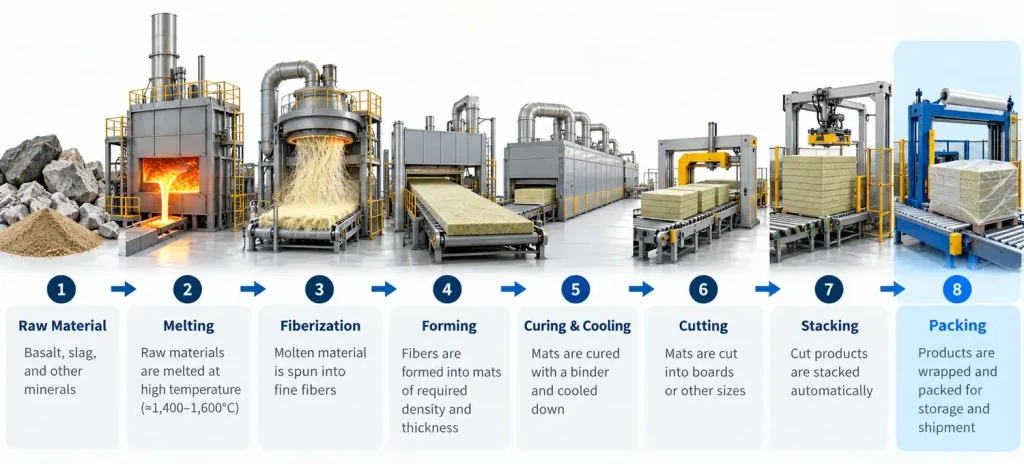
How Moisture Resistance Is Built on a Mineral Wool Production Line
Hydrophobicity is not a property of rock. It is a property of the process, added as a film a few molecules thick and fixed by the curing cycle. Two mineral wool production line configurations running the same basalt can deliver different water absorption values.
Hydrophobic Additive at the Fibre Collection Stage
The repellent is sprayed onto the fibres while they are hot and airborne, in the same zone where the binder is applied. Distribution matters more than quantity: additive that lands unevenly gives a board that repels water in one area and absorbs it in another.
Curing Oven and Final Moisture Content
The oven fixes the film in place with the binder. Under-curing leaves the treatment mobile and the board soft; over-curing degrades the organic components. Final moisture content is the release criterion, and controlled lines hold it below 1 percent by mass.
Packaging and Pallet Protection
Repellency in service does not protect a pallet in a yard. Compressed packs are the first barrier against rain and ground water, and heat shrink packaging keeps the stack sealed until the facade closes.
Specification and Site Practice That Keep Mineral Wool Dry
Most wet insulation failures are decided before the first board is opened, by a specification that names no absorption class and a delivery left on wet ground.
| Stage | Practice | Effect |
| Specification | Declare WS and WL(P) values | Creates a figure verifiable on delivery |
| Storage | Under cover, off the ground, oldest first | Stops wicking from wet surfaces |
| Installation | Close the facade at the end of each shift | Shortens the exposure window |
FAQ
These questions sit outside the main discussion but decide real projects: fire performance, frozen wool, and proving that installed material is dry.
Does wet mineral wool lose its fire classification?
Not permanently. The fibre is non-combustible mineral, water neither burns nor changes that, and a dried board returns to its declared Euroclass. The risk sits in the assembly: saturated wool against steel promotes corrosion, and a corroded fixing can fail in a fire before the insulation does.
Can frozen mineral wool be thawed and reused?
It can, if it froze once and was not compressed while wet. Ice expands in the pores and can disrupt binder bonds, so repeated cycles leave the board friable. Thaw slowly, dry fully, then check rebound.
How do you check whether installed mineral wool is still damp?
Read a moisture meter calibrated for the material at several depths, since a dry facing says nothing about the core. Where the cavity opens, weigh a cut sample, dry it, and weigh it again.




