
What Is a Melting Furnace in Glass Wool Production?
Walk into any glass wool plant, and the first thing you’ll notice is the sheer scale of the operation. But if you follow the production line from start to finish, one piece of equipment stands out as the undisputed heart of the whole process: the melting furnace. Without it, nothing else happens.
A melting furnace for glass wool lines takes raw materials — silica sand, limestone, soda ash, and a significant percentage of recycled glass cullet — and transforms them into a stable, homogeneous molten glass at temperatures reaching 1,500–1,600°C. This molten glass then flows downstream into the fiberizing section, where it gets spun into the soft, fluffy insulation material we see everywhere from attic walls to car dashboards.
The quality of the glass liquid coming out of the furnace directly affects fiber diameter consistency, product density uniformity, and ultimately, the thermal insulation performance of the finished product. That’s why selecting the right furnace isn’t just an equipment purchase — it’s a strategic decision that impacts every downstream operation.
Most modern glass wool lines use what’s called a unit furnace (or unit melter) with a long, narrow pool design. This configuration gives operators meaningful control over the longitudinal temperature gradient along the melt. It’s not just a design preference; it’s a deliberate engineering choice that allows precise heat management where it matters most.
For a closer look at how the entire production line fits together, this overview of glass wool production lines provides a helpful starting point.
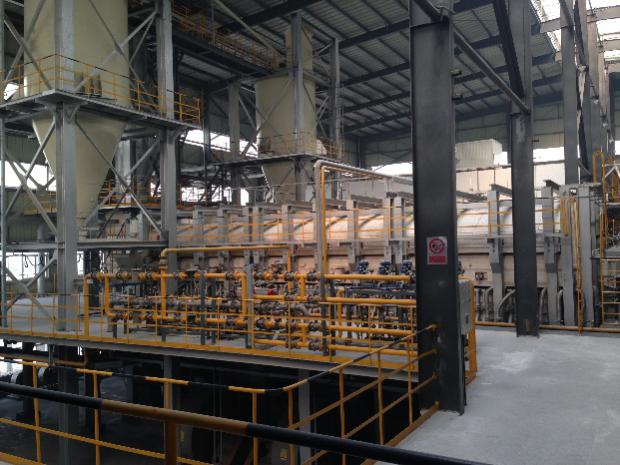
Types of Melting Furnaces for Glass Wool Lines
Not all melting furnaces are created equal. Over the years, the industry has developed several furnace configurations, each with its own strengths and trade-offs.
The table below outlines the main furnace types commonly found in glass wool manufacturing:
| Furnace Type | How It Works | Typical Capacity | Key Advantage |
|---|---|---|---|
| Cross-fired regenerative | Gas burners fire across the bath; regenerators preheat combustion air | 100–400 tons/day | High efficiency for large-scale production |
| Oxy-fuel | Pure oxygen replaces ambient air for combustion | 50–300 tons/day | Lower NOx emissions, smaller footprint |
| All-electric (Cold Top) | Electric energy melts raw materials with a cold layer on top | 10–55 tons/day | Low emissions, fast start/stop, minimal maintenance |
| Electric boost | Electrodes add supplemental heat to gas-fired furnaces | Retrofit for existing lines | Increased throughput, improved glass quality |
Oxy-fuel furnaces have become increasingly common in recent years. By using pure oxygen (typically 93%+ purity) instead of ambient air — which is mostly nitrogen — these systems achieve higher flame temperatures with less fuel input. The reduced exhaust gas volume also means less heat waste and significantly lower NOx emissions compared to conventional air-fuel systems. The trade-off is that they require an on-site oxygen supply, either from a cryogenic plant or a VPSA system.
All-electric cold top melters offer a different set of advantages. These furnaces can be turned off or placed in stand-by very quickly according to production needs, without damaging the refractory lining. They also produce very low emissions — the filtration system sometimes consists of nothing more than a simple bag filter for dust. However, their capacity range is more limited, typically from 10 to 55 tons per day. For higher volumes, multiple units can be installed in parallel feeding a single forehearth.
A detailed look at a Melting Furnace in Glass Wool Production reveals how these different technologies are integrated into a complete melting system.
Key Factors to Consider When Selecting a Melting Furnace
Choosing the right furnace involves balancing several competing priorities. Here are the main factors that typically come into play:
Capacity and Production Scale
This is usually the starting point. What’s your target daily output? A small specialty line might be perfectly served by a 30–50 ton/day electric melter. A large industrial operation producing hundreds of tons per day will almost certainly require a gas-fired regenerative or oxy-fuel furnace.
That said, there’s been an interesting shift in thinking recently. Instead of aiming to maximize furnace lifetime, some producers now focus on increasing pull rate — producing more tons per square meter of hearth area. This approach might mean accepting a shorter furnace campaign (say 6 years instead of 12) but achieving double the throughput, which can mean faster return on investment and more frequent opportunities to upgrade technology.
Fuel Type and Energy Efficiency
Energy consumption in glass melting can account for over 75% of the total energy requirements of glass manufacture. That’s a staggering figure, and it means fuel choice and efficiency measures have an enormous impact on operating costs.
The main fuel/energy options are:
- Natural gas with air combustion — traditional but less efficient
- Natural gas with oxy-fuel combustion — higher efficiency, lower emissions
- All-electric — highest direct melting efficiency, but electricity costs vary by region
- Hybrid (gas + electric boost) — offers flexibility to balance cost and output
Electric boosting deserves special mention here. By inserting electrodes directly into the glass melt, producers can increase convective movements within the melt, reduce residence time, and improve glass quality. It also provides a useful control parameter for compensating pull rate fluctuations. Many existing gas-fired lines have been retrofitted with electric boost systems to increase output without building entirely new furnaces.
Some plants are also exploring heat recovery from furnace exhaust. Hot air between 200–400°C can be captured and used to preheat incoming combustion air or even heat the facility itself. Every bit of recovered energy translates directly to lower gas consumption.
Refractory Material Selection
This is one of those areas that doesn’t get much attention from outsiders but makes a huge difference in real-world operation. The refractory lining of a melting furnace is constantly under attack from high temperatures and corrosive glass melt. Choose the wrong materials, and you’ll be shutting down for repairs far sooner than planned.
For most glass wool melting furnaces, fused zirconium corundum bricks (often 33# or 41# compositions) are the standard choice for the bottom paving and pool walls. The liquid flow hole — the passage where molten glass exits the furnace — is particularly vulnerable. Most furnaces use 41# non-shrinkage fused zirconium corundum bricks for this section, and because the glass temperature here is relatively low (typically below 1250°C), erosion is manageable.
The crown (roof) of the furnace presents a different challenge. Many older furnaces use silica bricks for the crown, but these are vulnerable to alkali and boron vapor erosion. After 9 months to a year, rat holes start developing. Regular hot repairs can extend life to about three years, but that’s a difficult and disruptive process. For a kiln life exceeding five years, chromium zirconium corundum bricks containing 30% chromium or special sintered mullite bricks are more appropriate.
Furnace Age and Maintenance Planning
A typical glass wool melting furnace operates for about 3–5 years before requiring a major rebuild. That’s the furnace age you can reasonably expect under normal operating conditions. But — and this is an important “but” — actual lifespan depends heavily on the severity of operating conditions, the quality of refractory materials selected, and how well the furnace is maintained.
In some demanding applications where the furnace is pushed to its limits, that number might be shorter. Conversely, with careful operation and high-quality materials, some producers have extended campaigns beyond five years. The key is understanding the wear mechanisms — especially corrosion from glass contact and thermal erosion in the crown — and planning maintenance accordingly.
One smart practice: use air blowing near the liquid level line of the pool wall instead of insulation. This cooling effect significantly extends service life in that vulnerable zone.

Key Components of a Melting Furnace System
A melting furnace for glass wool lines isn’t a single piece of equipment. It’s an integrated system with several critical subsystems, each playing a specific role.
The Feeder and Glass Level Control
Raw materials enter the furnace through a sealed inclined blanket feeder. The “sealed” part is crucial — it prevents heat loss and reduces contamination. This feeder is typically interlocked with a glass level controller that keeps the molten glass surface stable within tight tolerances, often as precise as ±0.2mm. Stable glass level means stable outflow, and stable outflow means consistent fiber formation downstream.
The Combustion System
For oxy-fuel furnaces, the combustion system is where much of the technological sophistication resides. Burners — typically five or more pure oxygen combustion burners arranged in a cross-firing pattern on both sides of the furnace — are individually regulated. Each has its own flow meter and adjustment device, allowing operators to fine-tune the longitudinal temperature profile without affecting the whole system.
Bubblers and Homogenization
Inside the furnace, at the hot spot zone, a row of air bubblers pushes air upward through the glass melt. This bubbling action accelerates the melting rate, speeds up clarification, and promotes homogenization. Without bubblers, you’d need either higher temperatures or longer residence times to achieve the same glass quality.
The Forehearth
After the glass liquid exits the melting section, it passes through a flow hole into the forehearth. This is where the glass is conditioned — cooled to the right temperature for fiberizing (typically 1,100–1,200°C), homogenized, and any remaining bubbles are removed. The forehearth is usually divided into independent temperature zones, each with its own oxygen burners, allowing flexible adjustment based on downstream requirements.
Common Selection Mistakes to Avoid
Even experienced operators can sometimes overlook certain factors when selecting a furnace. Here are a few to watch out for:
- Underestimating cullet quality requirements — Recycled glass constitutes 80–90% of the batch in many modern lines. But cullet needs its own handling: magnets to remove metal, screens to control particle size, and sometimes color sorting. Too much fine cullet dust causes problems in the furnace.
- Ignoring the crown material — As mentioned earlier, silica brick crowns are cheap but short-lived. The extra upfront cost of chrome-containing refractories often pays for itself in reduced downtime.
- Skimping on instrumentation — Glass level controllers, pressure measurement systems, and industrial TV cameras for observing flame and bubbling aren’t luxuries. They’re essential for safe, consistent operation.
- Forgetting about emissions — Environmental regulations are getting tighter. Oxy-fuel combustion significantly reduces NOx, but you’ll still need proper exhaust treatment. Some modern lines integrate SNCR denitration and wet electrostatic precipitators to meet standards.
Current Market Trends and What They Mean for Furnace Selection
The glass wool market is experiencing steady growth driven by increasing demand for thermal and acoustic insulation in the construction industry. The glass wool acoustic insulation market alone is projected to grow from $3.78 billion in 2025 to $4.05 billion in 2026, a CAGR of 7.1%.
This growth has several implications for furnace selection. First, producers are looking for furnaces that can scale efficiently — either through larger individual units or modular configurations that can be expanded. Second, there’s increasing pressure to reduce the carbon footprint of production. Oxy-fuel and all-electric furnaces are becoming more attractive as a result. Some plants are even exploring hydrogen as a potential fuel source, though the actual efficiency of hydrogen in melting furnaces remains uncertain at this stage.
Third, the push for sustainability extends to raw materials. Using more recycled glass reduces both energy consumption (cullet melts at a lower temperature than virgin materials) and environmental impact. A well-designed furnace system should be able to handle a high proportion of cullet without compromising glass quality.
Final Thoughts
Selecting a melting furnace for glass wool lines isn’t just about picking the biggest or the cheapest option. It’s about matching the furnace design — its capacity, fuel type, refractory configuration, and control systems — to the specific production goals, raw material availability, and regulatory environment of the operation.
A furnace that works beautifully for a small specialty line might be completely wrong for a high-volume commodity producer. And what works today might not be optimal five years from now, given how quickly combustion technology and environmental standards are evolving.
That’s why it’s worth taking a systematic approach to selection, looking not just at upfront costs but at total cost of ownership, energy efficiency, maintenance requirements, and future flexibility. The melting furnace may be the heart of the glass wool production line, but it needs to be the right heart for the specific body it’s going into.
If you want to know more about melting furnace for glass wool lines, please read what is melting furnace for glass wool lines.
FAQ
How much cullet can a typical glass wool melting furnace handle?
Most modern melting furnaces for glass wool lines can accommodate 80–90% recycled glass cullet in the batch mix. Some plants in Europe routinely run at these levels, receiving multiple truckloads of recycled glass daily. The key is proper cullet preparation — removal of contaminants, particle size control, and consistent quality. Higher cullet percentages generally mean lower melting temperatures and reduced energy consumption, but the furnace design must accommodate the different melting behavior of recycled material compared to virgin batch.
What’s the difference between electric boosting and a fully electric furnace?
Electric boosting refers to the use of electrodes to add supplemental heat to a primarily gas-fired furnace. This hybrid approach allows operators to increase throughput or improve glass quality without building a new furnace. A fully electric furnace (often called a cold top electric melter), by contrast, uses electrical energy as the sole heat source. The latter offers extremely low emissions and fast start-stop capability, but capacities are generally capped around 55 tons/day per unit. Electric boosting, on the other hand, can be applied to much larger furnaces producing hundreds of tons daily.
How long does it take to rebuild a glass wool melting furnace when its campaign ends?
A complete furnace rebuild typically takes several weeks, though the exact timeline depends on the size of the furnace and the extent of refractory replacement required. This is why scheduling is critical — producers often time major rebuilds during seasonal demand lulls to minimize production losses. Some modern furnace designs allow for “hot repairs” to certain sections (like the crown) without a full shutdown, extending the overall campaign life. However, any significant work on the melting section requires cooling down the furnace, which is a slow process to avoid thermal shock damage to remaining refractories.




