
When it comes to insulating a building, there are plenty of options on the market. Fiberglass, cellulose, spray foam — each has its advocates. But there’s one material that keeps coming up in conversations about high-performance construction, and for good reason: rock wool insulation. Also known as stone wool or mineral wool, this material has been around for decades, yet it feels increasingly relevant given today’s focus on fire safety, energy efficiency, and sustainable building practices.
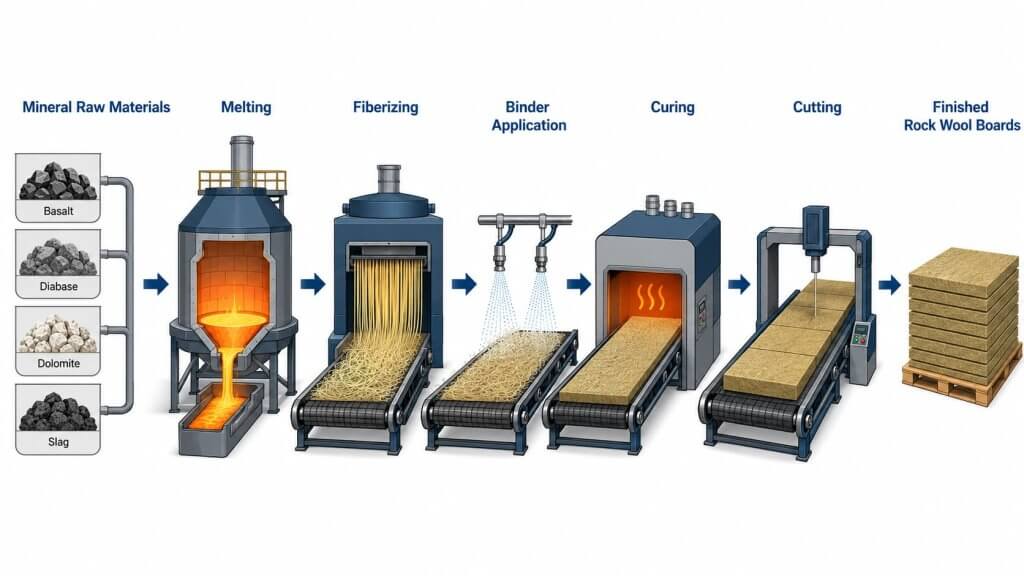
The manufacturing process is part of what makes it interesting. Volcanic rock — typically basalt — is melted at extremely high temperatures, then spun into fine fibers that are compressed into batts, boards, or loose-fill. The result is a dense, fibrous material that performs differently from just about anything else on the market. Here’s a closer look at five benefits that make rock wool insulation worth considering.
1. Fire Resistance That Actually Matters
Let’s start with the big one. Rock wool insulation is non-combustible. It doesn’t burn, it doesn’t contribute to flame spread, and crucially, it doesn’t release toxic smoke when exposed to fire. That last point matters more than most people realize — in many house fires, it’s smoke inhalation, not the flames themselves, that proves most dangerous.
The material can withstand temperatures in excess of 1,000°C (over 1,800°F) without melting or losing its structural integrity. In practical terms, that means rock wool insulation can buy valuable time — time for occupants to escape, time for emergency services to respond, and time to limit structural damage. It’s the kind of passive fire protection that works silently in the background, compartmentalizing risk and slowing the spread of fire through walls, floors, and ceilings.
2. Thermal Performance That Stays Consistent
Rock wool insulation delivers excellent thermal performance, with a high R-value per inch. But what’s arguably more important is that this performance doesn’t degrade over time. Unlike some materials that settle or compress, rock wool maintains its shape and insulating properties for the life of the building.
The open fiber structure traps air, which slows the transfer of heat. Properly installed, it can reduce heating needs by up to 70 percent. That translates to lower energy bills, reduced emissions, and a more comfortable indoor environment year-round. It’s worth noting that rock wool insulation typically has a thermal conductivity of around 0.034 to 0.044 W/mK, depending on the specific product — figures that place it among the better-performing insulation materials available.
3. Sound Absorption for Quieter Spaces
Noise pollution is one of those things people don’t always think about until they’re living with it. Rock wool insulation excels at sound absorption because its porous structure traps sound waves and reduces noise transmission. This makes it particularly valuable in multi-family housing, office buildings, and any environment where acoustic comfort matters.
The material is often specified for interior walls, ceilings, and floors to reduce noise between rooms and units. In commercial settings, it contributes to quieter, more productive environments. And in residential applications, it can make a noticeable difference in how much outside noise penetrates the building envelope.
4. Moisture Resistance That Prevents Problems
This is one of those benefits that doesn’t get enough attention. Rock wool insulation is water-repellent. It doesn’t absorb moisture, which means it doesn’t rot, and it doesn’t promote the growth of mold, mildew, or fungi.
But here’s the nuance: while it repels water, it’s also vapor-permeable. That means it allows water vapor to pass through, enabling wall systems to dry out if moisture does get in. This combination — water resistance plus the ability to breathe — helps prevent the condensation and moisture accumulation that can lead to structural damage and indoor air quality problems. For buildings in humid climates or areas prone to moisture issues, this is a significant advantage.
5. Sustainability and Durability
Rock wool insulation is made from abundant natural resources — primarily volcanic rock — and typically contains a high percentage of recycled content. The stone wool itself is endlessly recyclable, and the manufacturing process continues to evolve with improvements in binder technology and fiber processing that reduce environmental footprints.
But sustainability isn’t just about what goes into the material. It’s also about how long it lasts. Rock wool insulation doesn’t degrade over time. It maintains its shape, its R-value, and its structural integrity for the life of the building. That means fewer replacements, less waste, and better long-term performance. The global market for rock wool insulation reflects this growing demand, with projections showing growth from USD 4.1 billion in 2025 to USD 6.7 billion by 2032.
Where Rock Wool Insulation Works Best
One of the practical advantages of rock wool insulation is its versatility. It’s available in several forms — batts, boards, rolls, and loose-fill — making it suitable for a wide range of applications. Here’s a quick look at where it’s commonly used:
| Application Area | Common Product Forms | Key Benefits |
|---|---|---|
| Exterior walls | Rigid boards (continuous insulation) | Minimizes thermal bridging, fire resistance |
| Interior wall cavities | Batts (semi-rigid) | Sound absorption, fire compartmentalization |
| Attics and lofts | Rolls, batts | Thermal performance, non-combustible |
| Basements and below-grade | Boards, batts | Moisture resistance, vapor permeability |
| Roofs and cathedral ceilings | Boards, slabs | Thermal insulation, fire resistance |
| Floors and ceilings | Slabs, batts | Sound reduction, thermal insulation |
The Rock Wool Insulation manufacturing process has become increasingly automated and efficient, allowing for consistent quality at scale. Key equipment like the Electric Furnace plays a critical role in melting raw materials at the high temperatures required, while the Centrifuge is essential for spinning the molten rock into the fine fibers that give the material its unique properties.
A Few Considerations
It’s only fair to acknowledge that rock wool insulation isn’t the cheapest option on the market. It typically costs more than standard fiberglass insulation. But the question isn’t really about upfront cost — it’s about value over the life of the building. The fire resistance, acoustic performance, moisture management, and long-term durability add up to a material that often justifies the premium.
Installation is another consideration. Rock wool is denser than fiberglass and requires a bit more care during handling. But many installers find that its friction-fit properties make it easier to get a snug, gap-free installation compared to some other materials. And once it’s in place, it stays in place — no sagging, no settling.
The Bottom Line
Rock wool insulation offers a combination of benefits that few other materials can match. Fire resistance that genuinely protects lives and property. Thermal performance that stays consistent for decades. Sound absorption that makes spaces more comfortable. Moisture management that prevents costly problems. And sustainability credentials that align with modern building priorities.
It’s not the cheapest option, and it’s not the right choice for every project. But for buildings where safety, durability, and long-term performance matter — which is to say, most buildings — rock wool insulation deserves serious consideration. The numbers back it up, the applications are proven, and the track record speaks for itself.
FAQ
Is rock wool insulation safe to handle during installation?
Rock wool insulation is generally safe to handle, but standard precautions are recommended. The fibers are not classified as carcinogenic, but they can cause temporary skin irritation similar to fiberglass. Wearing long sleeves, gloves, and a dust mask during installation is good practice. Unlike some older insulation materials, rock wool does not contain asbestos or other hazardous substances.
How does rock wool insulation compare to spray foam for soundproofing?
Both materials provide acoustic benefits, but they work differently. Rock wool’s dense, fibrous structure absorbs sound waves directly, making it highly effective for reducing noise transmission through walls and floors. Spray foam creates an air-tight seal that blocks sound but doesn’t absorb it as effectively. For applications where sound absorption is the priority — like home theaters or music studios — rock wool is often the preferred choice.
Can rock wool insulation be used in existing buildings or only new construction?
Rock wool insulation works well in both new construction and retrofit projects. Batts and rolls can be installed in existing wall cavities, attics, and basements during renovations. Rigid boards are often used for exterior continuous insulation on existing buildings. The material’s friction-fit properties make it particularly suitable for retrofitting because it stays in place without requiring adhesives or special fasteners in many applications.




