
Finding trustworthy suppliers of rock wool production lines can feel straightforward at first, but the details matter a lot. A supplier may advertise a “complete” system, yet the real scope can vary widely from one offer to another. In practice, the best choice is usually the one that balances engineering depth, installation support, and long-term stability rather than the lowest headline price.
What a Complete Rock Wool Production Line Usually Includes
A true turnkey line is more than a melting furnace. It is a connected production system where each stage affects the next one.
| Core module | Main purpose |
|---|---|
| Raw material batching | Keeps composition consistent |
| Melting system | Turns mineral input into molten material |
| Fiberizing/spinning | Creates the wool fibers |
| Collecting and forming | Shapes the mat and controls density |
| Curing oven | Stabilizes the final structure |
| Cutting and packaging | Prepares the product for shipment |
A properly designed Rock Wool Production Line should also include control systems, dust removal, and safety components. Those parts are sometimes treated as “extras,” which is why scope confirmation is so important.
Support systems that are easy to overlook
A line can look complete on paper and still miss important items:
– automation cabinets
– electrical control integration
– dust collection
– spare parts packages
– operator training
– commissioning support
That last item is especially important. Without proper startup support, even a good line may take longer to stabilize than expected.
Where to Find Reliable Suppliers
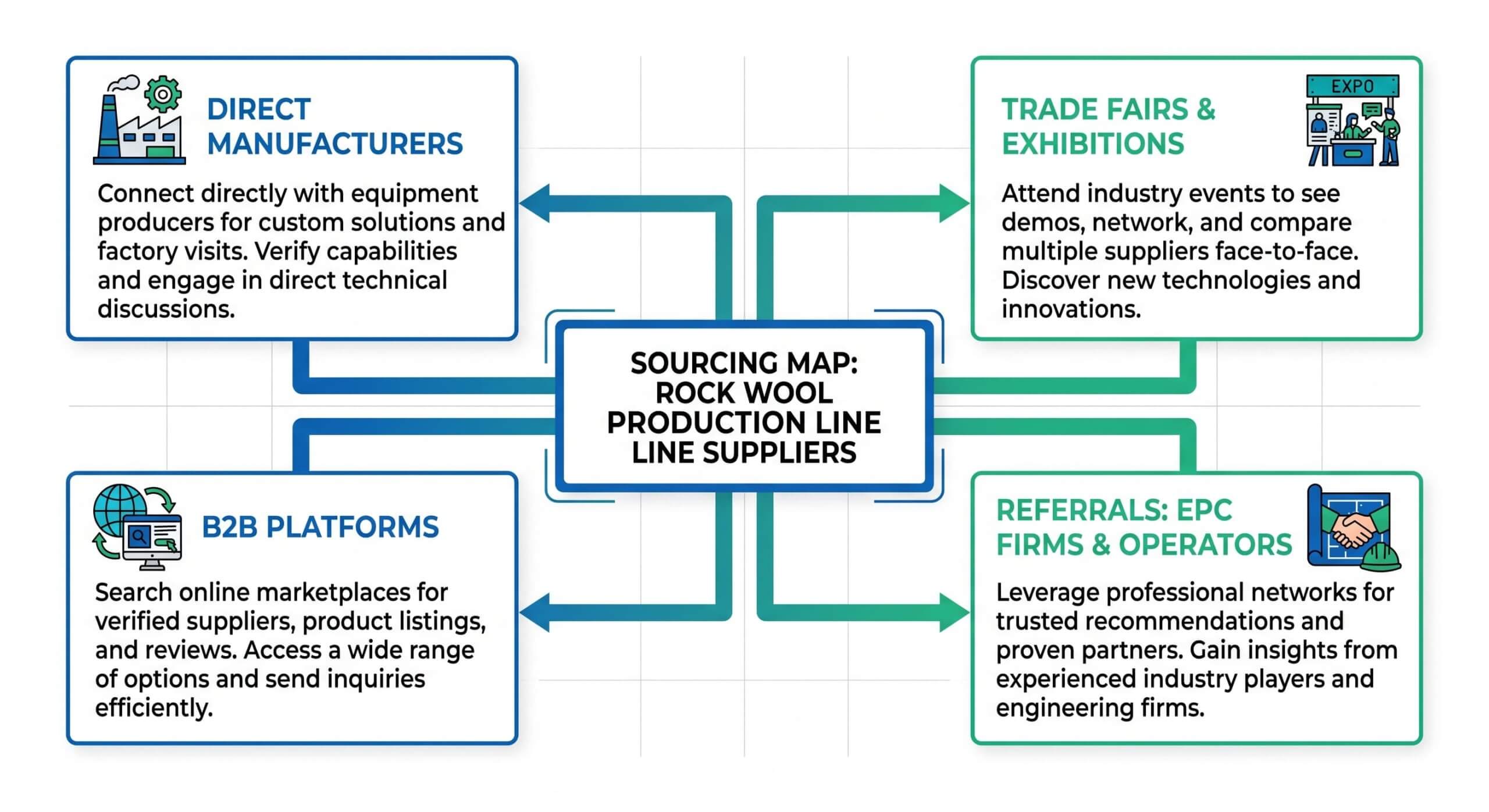
There are several practical ways to source vendors, and each one has a different value.
Direct manufacturers
This is usually the strongest option for serious industrial buyers. Direct manufacturers are more likely to provide:
– custom capacity planning
– engineering drawings
– installation guidance
– after-sales parts support
They are also easier to evaluate because technical discussions tend to be more detailed. Still, a factory claim should always be verified.
This is usually the strongest option for serious industrial buyers. One of the easiest ways to find direct manufacturers is by searching Google using keywords such as:
- rock wool production line manufacturer
- rock wool production line supplier
- rock wool production line factory
- mineral wool production line manufacturer
- rock wool production equipment manufacturer
Trade fairs and exhibitions
Industry exhibitions remain useful because they let buyers compare several suppliers quickly. It is easier to judge whether a vendor understands the process when engineers are present, not just sales staff.
B2B platforms and directories
These are good for initial research and shortlisting. But listings can be uneven, so they work best as a starting point rather than a final decision tool.
Referrals from operators and EPC firms
This channel is often underestimated. Plant operators and engineering contractors usually know which suppliers deliver on time and which ones become difficult after the contract is signed.
Fastest ways to build a shortlist
1. Factory websites
2. Trade show exhibitor lists
3. Industrial marketplaces
4. Engineering consultants
5. Operator referrals
How to Evaluate a Supplier Before Requesting a Quote
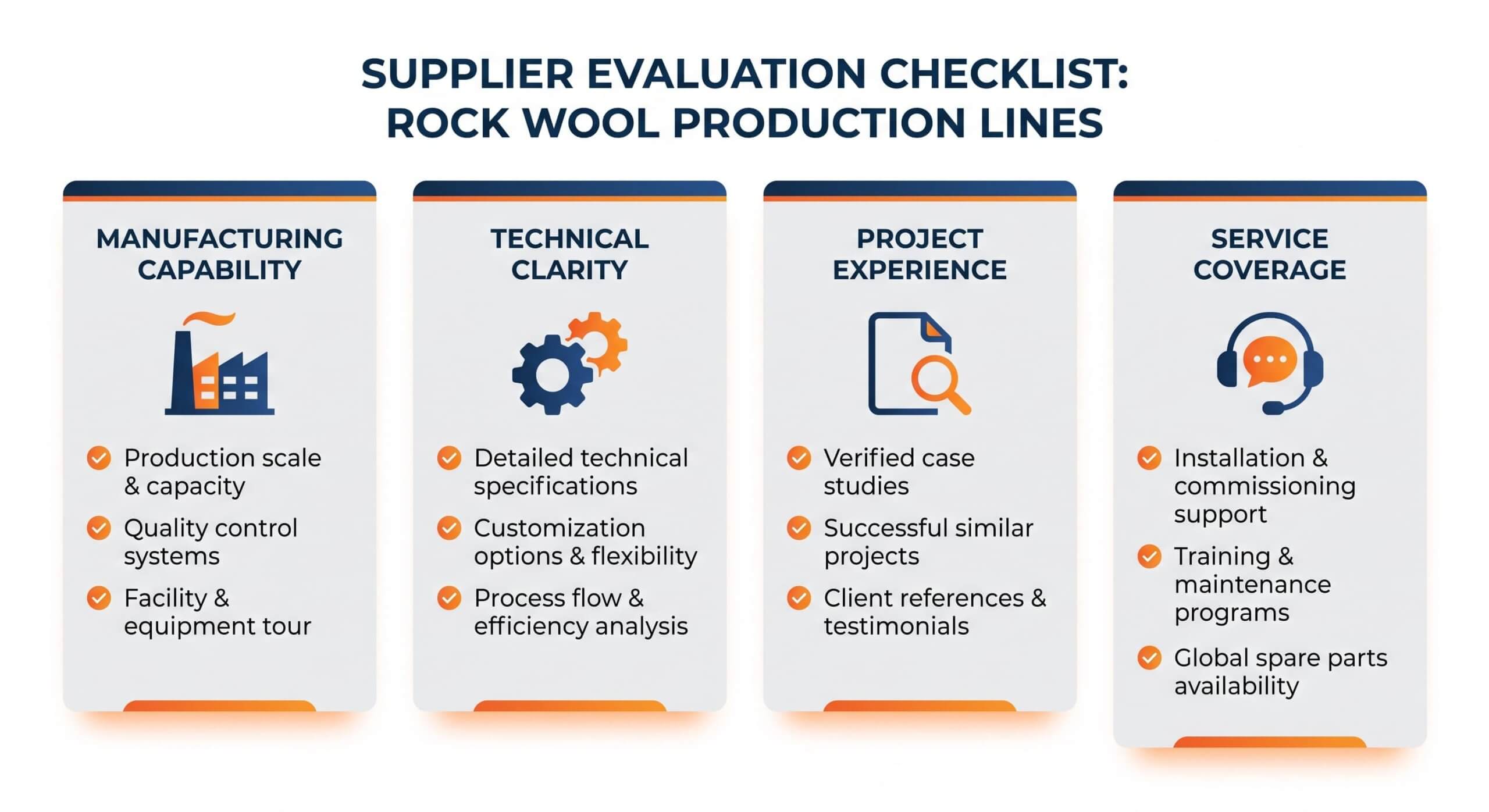
A quotation means little unless the supplier is technically credible.
| Evaluation point | What to check | Why it matters |
|---|---|---|
| Manufacturing ability | Do they design and build in-house? | Reveals whether they are a real producer |
| Technical clarity | Are specs and capacity ranges clear? | Prevents misleading promises |
| Project experience | Are there similar case studies? | Shows whether they can handle your scale |
| Service coverage | Is installation included? | Reduces startup risk |
| Spare parts policy | How fast can parts be delivered? | Affects downtime later |
Suppliers who are open about process details tend to be easier to work with. Those who avoid specifics usually deserve a closer look.
Why Energy Efficiency Should Be Part of the Decision
Rock wool manufacturing is energy-intensive, so efficiency is not a side issue. It directly affects operating cost, production stability, and long-term competitiveness.
The sustainability materials published by ROCKWOOL Group reinforce a broader industry reality: insulation producers are under growing pressure to improve process efficiency and reduce waste. That makes furnace design, heat management, and control consistency especially important when comparing suppliers.
Common Mistakes Buyers Make
Some mistakes appear repeatedly in industrial sourcing:
– choosing only by price
– assuming “complete” means the same thing everywhere
– skipping utility planning
– ignoring operator training
– not clarifying local compliance duties
A practical caution
A quotation may seem comprehensive while still excluding civil works, piping, power connections, or environmental approvals. Those omissions can create budget surprises later.
Questions Worth Asking Before Signing
Before moving forward, it helps to ask:
– What exactly is included in the scope?
– What production stability can be expected?
– How long does installation normally take?
– What training is provided after delivery?
– What warranty terms apply?
– Can the system be adjusted for local standards?
These questions often separate polished sales talk from real engineering capability.
Conclusion
When searching for suppliers of rock wool production lines, the most reliable approach is to compare technical depth, scope clarity, and service capability together. A good supplier should be able to explain the full line, support installation, and help the plant run efficiently after startup. In the end, the safest choice is usually the partner that reduces project risk, not just the one with the lowest quote.
FAQ
How long does supplier selection usually take?
For a large industrial project, shortlisting and comparison can take several weeks or longer, especially if the buyer wants to verify references and review technical drawings.
What documents should be requested before paying a deposit?
A buyer should usually ask for a technical proposal, equipment list, layout drawings, warranty terms, delivery schedule, and a clear scope-of-supply document.
Is a customized line better than a standard one?
A customized setup is often better when plant layout, capacity targets, or local regulations are specific. A standard line can work well too, but only when the operating conditions match the design closely.




