
Stone wool has quietly become one of the most relied-upon insulation materials in modern construction, industrial plants, and marine applications. As energy codes tighten and fire-safety expectations rise, specifiers, contractors, and production-line operators increasingly want to understand not just how the material performs, but what actually goes into making it. Knowing the raw materials and composition of stone wool is the first step toward judging product quality, controlling production cost, and predicting long-term reliability in the field.
Stone wool is made primarily from natural volcanic rocks such as basalt and diabase, which are melted at temperatures above 1400°C and spun into fine fibers, then bonded with a small amount of phenolic resin binder together with minor additives such as mineral oil; recycled slag and limestone or dolomite are commonly blended in to adjust the melt chemistry, while coke or electricity supplies the energy needed to reach melting temperature.
The sections below break down each raw material, explain the function of binders and process additives, and show how composition directly shapes the performance of the finished insulation.
What Is Stone Wool and How Is It Related to Rock Wool?
Stone wool and rock wool are two names for the same family of man-made mineral fiber insulation produced by melting natural stone and spinning it into fibers, while “mineral wool” is the broader category that also includes slag wool and glass wool.
Stone wool belongs to the wider family of mineral wool insulation. The term “stone wool” emphasizes that the primary feedstock is quarried stone, typically basalt or diabase, rather than recycled metallurgical slag. In many markets the product is simply called rock wool, and technically the two refer to the same manufacturing principle: a molten mineral melt is fiberized and consolidated into mats, boards, or pipe sections.
The distinction that matters for composition is between stone wool, slag wool made mostly from blast-furnace slag, and glass wool made from sand and recycled glass. Stone wool’s stone-based chemistry gives it a characteristic combination of fire resistance and thermal stability that sets it apart from lower-melting alternatives. For readers who want a deeper look at rock wool raw materials, the dedicated raw-material overview explains the functional role of each component in detail.
What Are the Primary Raw Materials of Stone Wool?
The primary raw materials of stone wool are basalt and other volcanic rocks, supplemented with limestone or dolomite as a flux and often blended with recycled industrial slag, all of which supply the oxides needed to form a stable, fiberizable mineral melt.
Basalt
Basalt is the backbone of most stone wool formulations. It is a dense volcanic rock rich in silica, alumina, iron oxide, and magnesium oxide. These oxides create a melt with the right viscosity and surface tension to be drawn into long, fine fibers. Basalt is abundant, comparatively inexpensive, and consistent in composition, which is why it appears in nearly every what rock wool made of discussion. Its high iron and magnesium content also helps the final product resist degradation at elevated temperatures.
Diabase and Other Volcanic Rocks
Diabase and related igneous rocks are used wherever local supply makes them economical. They contribute an oxide profile similar to basalt and help balance the melt chemistry so that fibers form uniformly rather than as coarse, brittle strands. In practice, many plants blend two or more stone types to smooth out natural variations in quarried rock and keep the melt predictable from batch to batch.
Limestone and Dolomite
Pure basalt alone can be too refractory, meaning difficult to melt and fiberize efficiently. Limestone, which is calcium carbonate, and dolomite, which is calcium magnesium carbonate, act as fluxes that lower the melting temperature and raise the calcium and magnesium content of the mix. The resulting chemistry improves fiber formation and contributes to the rigidity of board products, while reducing the energy required to keep the furnace at operating temperature.
Recycled Slag and Industrial Byproducts
Many producers blend in recycled slag from metal production. Adding slag reduces the need for virgin stone, lowers raw-material cost, and supports circular-economy goals that are increasingly required in public tenders. However, slag chemistry varies more than quarried rock, so careful batching is required to keep fiber quality stable. A well-designed ingredient and feeding system measures and mixes these components precisely before they enter the furnace.
When evaluating a rock wool production line, buyers should ask how the plant controls raw-material variability, because composition consistency is what separates a premium insulation product from an inconsistent one.

What Role Does the Binder Play in Stone Wool Composition?
The binder is a small but critical part of stone wool composition, typically a phenolic resin applied as a fine mist to the fibers and cured by heat, which gives the loose fiber mat cohesion, shape retention, and handling strength.
Phenolic Resin Binders
After fiberizing, the loose mineral fibers have almost no structural strength on their own. A phenolic resin binder, usually applied at roughly 2 to 5 percent by weight, coats the fibers and is hardened in a curing oven. The cured binder determines the product’s compressive strength, dimensional stability, and resistance to sagging over time. Modern plants work to minimize binder content while still meeting performance targets, which reduces both material cost and emissions from the curing stage.
Oils and Dust-Suppression Additives
A light mineral oil is commonly added to reduce dust during cutting and handling, and water-repellent agents may be introduced for products intended for external or high-humidity service. These additives are present in very small amounts but remain part of the full composition profile and influence how the material behaves on site. Understanding how rock wool is formed helps explain why binder distribution must be uniform, because uneven binder leads to soft spots and inconsistent board density.
What Fuels and Process Additives Are Used in Stone Wool?
Stone wool production requires intense heat, so coke or electricity supplies the melting energy, and small process additives such as fluxes and water repellents fine-tune the melt and the finished product’s properties.
Coke and Carbon Sources
In cupola-style plants, coke is burned to reach the roughly 1450°C needed to liquefy the stone. In electric-arc or electric-resistance furnaces, electricity provides the heat instead. The choice of energy source affects both operating cost and the emissions profile, which is why many new rock wool equipment installations favor electric melting for cleaner, more controllable operation.
Fugitive Components and Water Repellents
Beyond the main oxides, processors may add minor agents to control viscosity, reduce off-gassing, or improve hydrophobicity. These are present at trace levels but are worth noting for specifiers who need full material transparency for green-building certifications. A closer look at the cupola melting furnace shows how combustion-based melting integrates fuel, flux, and raw stone in a single continuous process.
How Are These Raw Materials Processed Into Stone Wool?
Raw stone, flux, and slag are weighed and fed into a high-temperature furnace, melted into a homogeneous liquid, spun into fibers by a high-speed centrifuge, coated with binder, and cured into the final insulation product.
Batching and Feeding
The process begins with a batching machine that weighs each raw material according to the formulation. Accurate batching is essential because small deviations in limestone or slag content shift the melt chemistry and change fiber quality downstream.
Melting
The blended charge enters a melting furnace where it is heated above its liquidus temperature. The goal is a clean, bubble-free melt with the right viscosity for fiberization. Electric and cupola furnaces achieve this through different mechanisms, but the chemical outcome for the stone wool is similar.
Fiberizing
Molten rock is poured onto a spinning industrial centrifuge machine often called a spinner or rotor, which flings it into micro-fibers using centrifugal force, sometimes assisted by high-velocity air. This is the moment the raw materials become “wool” rather than liquid stone.
Curing and Binding
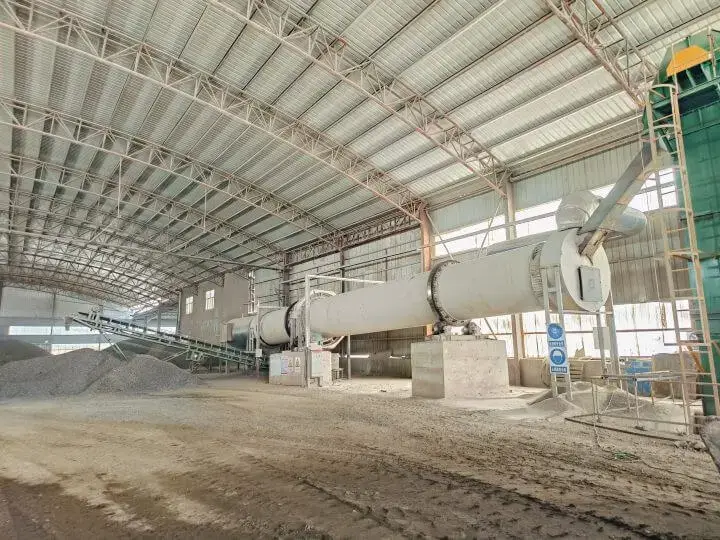
The fiber stream is collected on a moving conveyor, sprayed with binder, and passed through a curing zone where heat sets the resin. The manufacturing process overview ties these stages together and shows how each step depends on the one before it.
How Does Composition Affect Performance and Applications?
Stone wool’s stone-based chemistry and low organic content give it inherent fire resistance, stable thermal performance, and good acoustic damping, which is why it is specified across buildings, industry, and marine applications.
Thermal and Fire Performance
Because the fibers are made of melted stone, stone wool does not burn and can withstand temperatures far above those encountered in buildings. Its composition also gives it low thermal conductivity, making it effective at reducing heat transfer. The table below summarizes how composition links to key properties.
| Composition factor | Main component | Performance effect |
|---|---|---|
| Stone base | Basalt, diabase | High melting point, non-combustible |
| Flux content | Limestone, dolomite | Lower melt temperature, easier fiberization |
| Binder level | Phenolic resin | Strength and shape retention |
| Fiber density | Packing of fibers | Acoustic and load performance |
Acoustic and Moisture Behavior
The intertwined fiber network traps sound waves and, with water-repellent treatment, resists moisture uptake. This combination explains the wide range of rock wool applications from façade systems to technical insulation in process plants. The low organic content also means the material does not support mold growth when installed correctly.
How Does Stone Wool Composition Compare With Glass Wool?
Stone wool is made from melted volcanic rock at very high temperatures, while glass wool is made from sand and recycled glass at lower temperatures, giving stone wool higher heat resistance and glass wool a softer, lower-density fiber.
Both are mineral wools, but their raw materials and service limits differ. The comparison below helps specifiers choose the right product for the duty.
| Attribute | Stone wool | Glass wool |
|---|---|---|
| Main raw material | Basalt, diabase | Sand, recycled glass |
| Melting temperature | ~1400 to 1500°C | ~1000 to 1200°C |
| Maximum service temperature | Higher | Lower |
| Fiber character | Coarser, more rigid | Finer, softer |
| Typical use | Fire-rated, outdoor, industrial | Interior, cavity, general |
For a fuller explanation of mineral wool insulation and how the two are manufactured, the mineral-wool guide walks through both processes side by side. When the question is mineral wool vs rock wool, composition is usually the deciding factor for high-temperature duty.
Why Does Raw Material Quality Matter for Buyers and Plant Operators?
Raw material quality determines fiber consistency, energy use, and emissions, so buyers and production-line operators should treat feedstock specification and supplier control as a core part of product quality.
Consistency and Sourcing
Variability in basalt or slag chemistry forces the furnace to work harder and produces off-spec fibers. Stable, well-characterized feedstock reduces scrap, energy consumption, and maintenance downtime. This is why a complete rock wool production line guide always begins with raw-material handling rather than with the furnace itself.
Equipment and Process Considerations
The right melting and fiberizing equipment compensates for minor raw-material variation, but it cannot fix a poorly specified formulation. Plants that invest in precise batching, modern electric furnace technology, and disciplined process control achieve the most consistent stone wool. For those planning a facility, rock wool factory solutions cover how the full line, from feeding through packaging, supports compositional control.
Summary
Stone wool is fundamentally a product of melted stone. Basalt and similar volcanic rocks form the fiber backbone, limestone or dolomite adjust the melt, recycled slag improves sustainability, and a small phenolic binder gives the mat its shape and strength. Energy from coke or electricity drives the melt, and precise batching turns these raw materials into a consistent, fire-resistant insulation. Understanding this composition helps buyers select better products and helps operators build more reliable production.
FAQ
Is stone wool the same as rock wool?
Yes. Stone wool and rock wool describe the same man-made mineral fiber insulation produced by melting natural stone and spinning it into fibers. The two names are used interchangeably across different regions and technical standards, and both fall under the mineral wool family alongside slag wool and glass wool.
Does stone wool contain asbestos?
No. Stone wool is made from melted volcanic rock and a synthetic binder, not from asbestos minerals. Modern mineral wool insulation is manufactured to be free of asbestos, and its fibers are regulated for safe handling during cutting and installation with basic protective measures.
Can stone wool be made from or recycled into other materials?
Yes. Many formulations already include recycled industrial slag, and off-cuts from production can often be fed back into the process as feedstock. At end of life, stone wool can in some cases be remelted and reused, though the availability of that route depends on local recycling infrastructure and collection systems.




